
Motorists to see national speed limits dropped to 20mph in Oxfordshire under plans to promote cycling
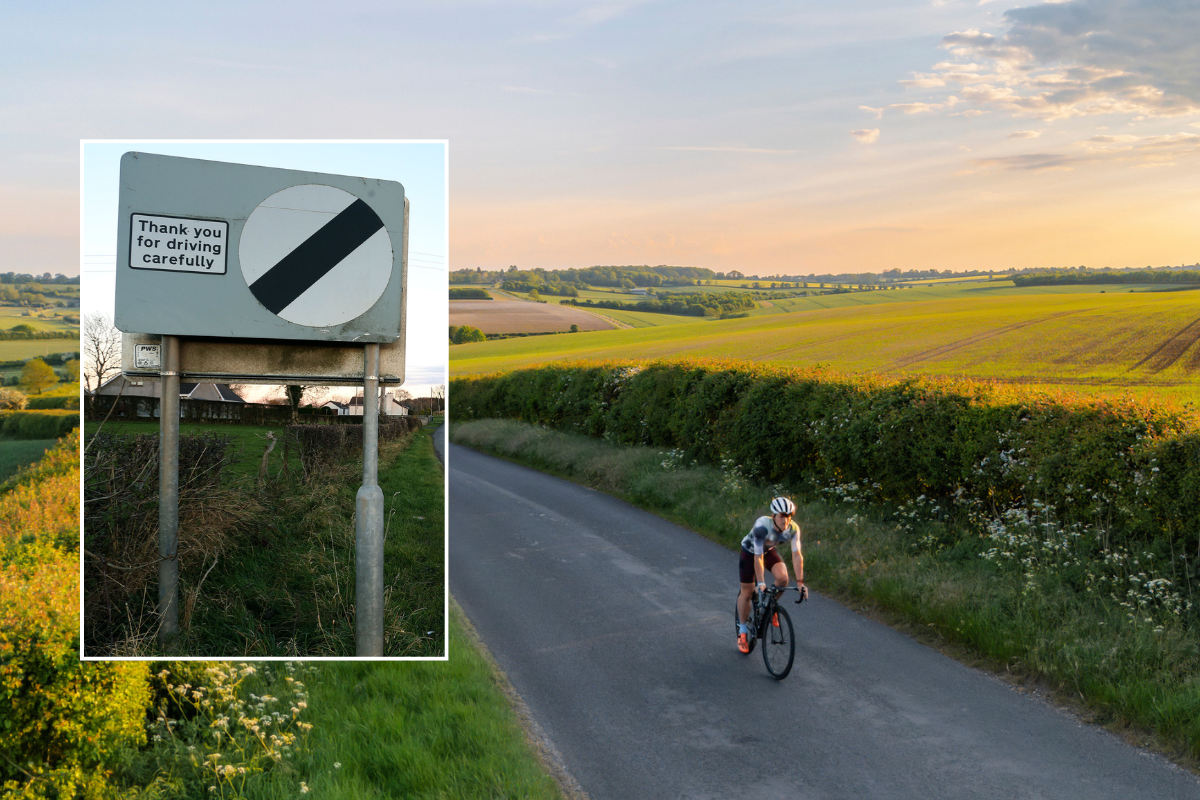
Motorists across Oxfordshire have been warned they could see rural roads slashed to 20mph under a new pilot programme designed to give priority to cyclists, walkers and horse riders. Oxfordshire County Council approved the new quiet lanes initiative, which will introduce physical obstacles, including gates and bollards, to prevent traffic on designated routes.The new measures represent a significant enhancement to existing Department for Transport policy, moving beyond traditional signage-based approaches to achieve what the council describes as the safest outcomes. Access will remain available for local residents, agricultural workers, businesses and emergency services, with the council stating that overall journey times for drivers would only be marginally affected due to alternative routes being available. TRENDING Stories Videos Your Say Oxfordshire joins Cambridgeshire, North Yorkshire, Norfolk and Suffolk, which all implemented quiet lane rules under the Labour Government during the late 1990s. These rural designations function as countryside equivalents to the Low Traffic Neighbourhoods familiar in urban settings, which typically feature reduced speed limits, physical obstructions such as flower boxes, and enforcement cameras. Hundreds of country roads have been quietly transformed under these powers, with several routes now subject to the regulations first developed by what was then the Countryside Agency, now known as Natural England.Norfolk has gone so far as to market its quiet lanes as a tourist attraction, promoting them to visiting cyclists through the council-backed Visit North Norfolk website. Tim Bearder, the Liberal Democrat leader of Oxfordshire County Council, told the BBC: A lot of people living in our towns, villages, or cities want to go out and enjoy the rural landscape, but they're just put off by dangerous roads. We can reallocate that road space for the benefit of cyclists, pedestrians, people who want to ride horses, and it means people have got this safe access to enjoy the countryside. Councillor Rebekah Fletcher, the cabinet member responsible for transport management, added that the initiative aims to ensure local roads serve their communities rather than functioning as shortcuts for vehicles they were never built to accommodate.She said that the council would use evidence to ensure schemes are safe, effective and appropriate for their surroundings. LATEST DEVELOPMENTSUK risks 'devastating consequences' as EU threatens £69billion car industry with 'trade friction'New MOT test changes introduced today will be 'significant step forward' for driversHMRC launches new price hikes for petrol, diesel and electric cars today in blow to thousandsEdmund King, president of the AA, has raised concerns that Oxfordshire's approach strays from the scheme's original purpose. He explained the measures were designed to discourage motorists rather than prohibit them entirely from using these routes. The AA supports and understands the original concept of 'quiet lanes'. If these lanes are well signed, they are generally also understood and respected by drivers, Mr King told the BBC.He acknowledged there may be exceptional circumstances where vehicle restrictions could work without compromising access to farms, fields or homes, but suggested such cases would be rare.The Local Government Association defended councils' efforts to address traffic concerns, with a spokesperson stating that local authorities work closely with communities to deliver optimal results. Residents expect councils to provide cleaner air and safer streets where they live and work, improving quality of life and supporting more affordable travel options, the spokesperson added. The pilot schemes will be delivered through Experimental Traffic Regulation Orders, allowing measures to be tested in practice before any permanent decisions are taken. New lanes will only proceed where there is strong local support from both parish and county councillors, with statutory consultation built into the process. Our Standards: The GB News Editorial Charter
Narrative Intelligence Brief
This article was published by GB News, a source frequently categorized with a lean right bias based in United States of America. Our narrative intelligence engine continuously monitors coverage from this outlet to track framing, bias, and rhetorical patterns. Our initial algorithmic scan of this specific piece did not flag high-confidence rhetorical techniques, suggesting a generally straightforward reporting style or neutral framing. By understanding the editorial perspective of GB News, readers can better contextualize the information presented and compare it across our broader media matrix to find the real narrative.
Explore related topics: Stay informed with Real Narrative News as we track unfolding stories. Dive deeper into our coverage of pivotal topics including الضاحية الجنوبية, champions league, الجنوبية لبيروت, coupe monde, choose france, james milner, arne slot, president ilham, ilham aliyev, and dua lipa. Our intelligence streams continuously monitor these keywords to bring you unbiased analysis and real-time updates on topics like "Motorists to see national speed limits dropped to 20mph in Oxfordshire under plans to promote cycling".
More from GB News
June 1, 2026
British manufacturing growth hits strongest level in four years but 'sustainability remains in doubt'
June 1, 2026
We must call out how Britain has let 'anti-racism' zealotry override basic humanity
June 1, 2026
French Open star slapped with huge fine after 'unacceptable' comments on female umpire
June 1, 2026
Two major UK airports forced to divert flights due to fuel shortages
June 1, 2026
Top 5 European holiday hotspots Britons can reach in as little as 1hr 20 by train
Analysis Methodology
This narrative analysis was generated using the CoDataLab Global Intelligence Engine. Our proprietary AI scans thousands of cross-border sources to identify sentiment patterns, framing techniques, and potential media bias. While AI provides the data-driven foundation, our objective is to empower readers with additional context beyond the standard headline.The content displayed above is a structured summary designed for rapid information processing. For the full original report, please visit the source outlet.More Coverage
Discussion