
0
MAHA Is Monkeying Around With Lab Rats
May 4, 2026
Posted 3 hours ago by
In 1903, Mark Twain published A Dog’s Tale, a short story told from the perspective of a dog named Aileen. Half-collie, half–Saint Bernard, Aileen lives with Mr. Gray, a scientist; his wife; and their two children. One winter, a fire starts in the nursery, and Aileen pulls the one-year-old to safety. Mr. Gray and his scientist friends celebrate the rescue, debating whether the animal acted out of instinct or reason.
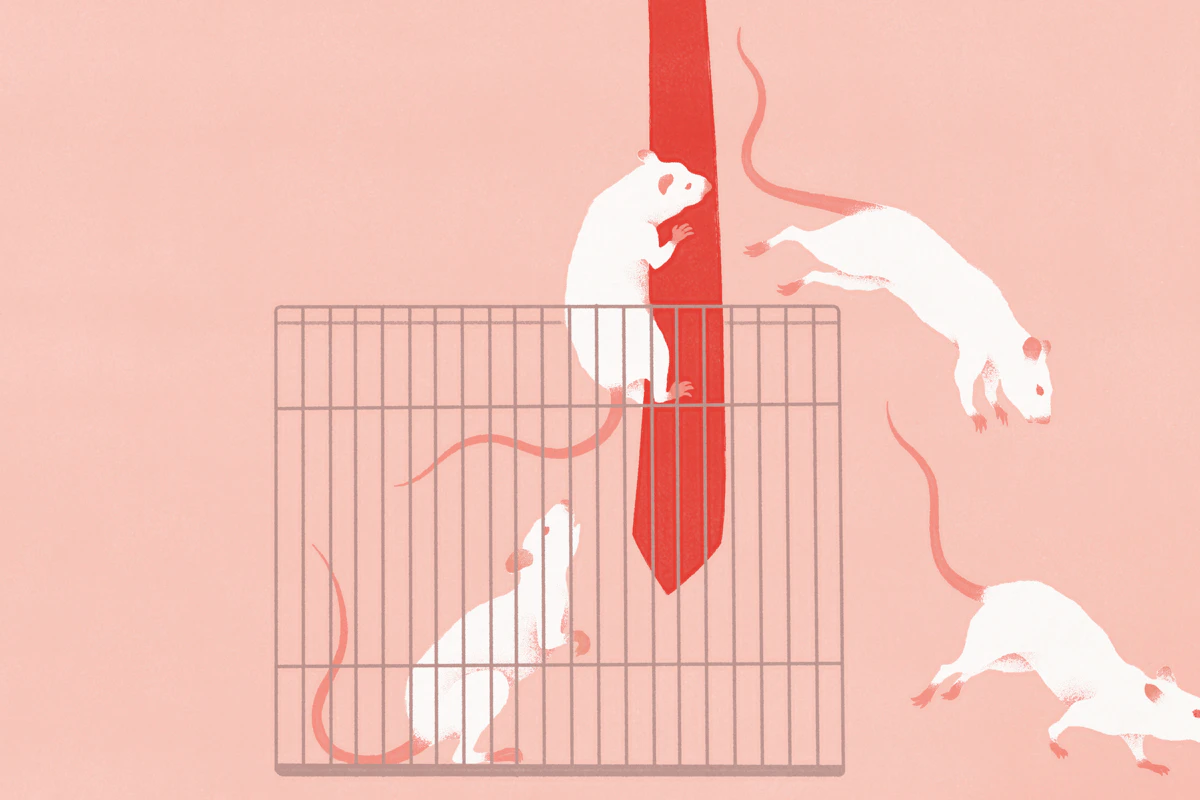
Then their discussion turns to another matter: Is the ability to see located in a certain area of dogs’ brains? When Mr. Gray’s wife and children go on vacation, the scientists use Aileen’s newly born puppy to find out.The experiment is gruesomely successful. “Suddenly the puppy shrieked, and they set him on the floor, and he went staggering around, with his head all bloody, and the master clapped his hands and shouted: ‘There, I’ve won—confess it! He’s as blind as a bat!’” Twain wrote. “And they all said: ‘It’s so—You’ve proved your theory, and suffering humanity owes you a great debt from henceforth,’ and they crowded around him, and wrung his hand cordially and thankfully, and praised him.” Aileen, the dog that had saved her owner’s child, is rewarded with the killing of her own. Confused about why her puppy is buried in the yard, she grows sick with grief and dies.Twain’s tragic fable poignantly articulated the writer’s concerns about animal experimentation—his fear, in some cases justified, that men of science were blithely maiming innocent creatures to settle banal scientific disagreements. The National Anti-Vivisection Society, a group that formed in London in 1875 to protest animal experimentation, reprinted A Dog’s Tale in its campaigns to shut down laboratories.For peak emotional impact, the society’s choice to highlight dogs was smart, as the animals have been human companions for thousands of years. Research even suggests that their brow bones evolved so that we might register their facial expressions more sympathetically. In February of last year, a similar choice was made at a congressional meeting of the Committee of Oversight and Government Reform.At the hearing, which was called “Transgender Lab Rats and Poisoned Puppies: Oversight of Taxpayer-Funded Animal Cruelty,” three beagle puppies—Nellie, Oliver, and Beasley—sat behind the witnesses testifying. Led by Republican Representative Nancy Mace from South Carolina, the hour-long meeting harshly critiqued the use of taxpayer dollars going to research that uses animals, particularly dogs. “The beagles are a reminder of the real costs of animal experimentation,” Mace said in her opening statement.Nancy Mace has said that animal testing unites the “QAnon side of the party and the socialist squad.” peta recently sent flowers to the director of the NIH, Jay Bhattacharya.As a conservative who once described herself as “Trump in high heels,” Mace may seem an odd champion of animal rights, an issue stereotypically associated with left-leaning groups like People for the Ethical Treatment of Animals, or PETA, which opposes animal testing as well as hunting, eating meat, and wearing fur or leather. But since Donald Trump first took office, the right has increasingly embraced ending the use of animals in scientific research and toxicity testing. In a 2021 press conference, Mace said that animal testing unites the “QAnon side of the party and the socialist squad.” PETA recently sent flowers to the director of the National Institutes of Health, Jay Bhattacharya, and issued a press release with images of posters that said Thank You, President Trump.During Trump’s second term, the Navy ended testing on dogs and cats, and the Centers for Disease Control and Prevention started phasing out its monkey research. In April 2025, the United States Food and Drug Administration announced a goal of replacing the animals on which new drugs are tested with “new approach methodologies,” or NAMs, over the next three to five years. In March of this year, it released draft guidance for how companies could include NAMs in new drug applications. (NAMs include human organs-on-a-chip, which reproduce the microenvironment of an organ inside a plastic computer chip; organoids, which are miniature versions of human tissue; computer modeling; AI; and other technologies that mimic the body.) The NIH announced that it wouldn’t fund new grants that use only animal models; proposals must also use human-focused approaches, like NAMs. And in early 2026, the Environmental Protection Agency, which helps determine whether pesticides or other products are toxic, promised to end mammalian animal testing entirely by 2035.What exactly is going on with the right’s focus on animal welfare? The exact number of animals involved per year in the United States for testing isn’t well accounted for, but it is certainly in the millions. Although the majority are rodents, others, including rabbits, guinea pigs, dogs, cats, and nonhuman primates, are used, too. There are plenty of reasons to want to reduce this number. Not only can experimentation lead to the suffering and death of the animals involved, but the findings from nonhuman animals don’t always translate to humans—especially when it comes to drug development. Many medications fail when they move from animal models to humans, and scientific advancements have dramatically improved the available alternatives to animal testing. The government’s latest moves have “opened up possibilities that I, for one, never imagined,” said a senior policy adviser at the American Anti-Vivisection Society, Eric Kleiman.But the question of why the government has taken such an interest is complicated. The push originates from the U.S. Department of Health and Human Services Secretary Robert F. Kennedy Jr., who has said he is “deeply committed to ending animal experimentation.” “I actually believe he cares,” Sam Halabi, a professor at Georgetown University’s School of Health and the director of the Center for Transformational Health Law, told me. “He’s been on record for a long time saying he cares about the treatment of animals.” At the same time, scientific decision-making in the Trump administration has been fraught, to say the least. It’s often mixed with politics, as Halabi and his co-authors pointed out in a 2026 paper in the Journal of Health Politics, Policy and Law: “The current period is defined by an alarming intensification of partisan antagonism, administrative disinvestment, and strategic delegitimization.”Animal testing hasn’t been immune to that trend. At the congressional hearing, Mace repeatedly fixated on “transgender mice,” or mice used in studies on transgender-related health issues, such as susceptibility to HIV and drug overdoses. “The Biden-Harris administration spent 2.5 million taxpayer dollars to study the fertility of transgender mice,” she said, referencing studies that examine the reproductive health of rodents given hormones. “Let that sink in.” Republican Representative Lauren Boebert raised concerns about animal experiments that incorporated fetal tissue from elective abortions and called for more investigation. (It’s worth noting that the fetal tissue would otherwise be medical waste; no abortions are performed in order to obtain it.)A meaningful reduction in animal testing would require massive investment and policy innovation in drug testing and basic research. Instead, the Trump administration has cut millions in scientific grants.A meaningful reduction in animal testing would require massive investment and policy innovation in drug testing and basic research. Instead, the Trump administration has cut millions in scientific grants. As of March, the FDA had given 74 percent fewer new grants this fiscal year compared to the fiscal years between 2021 and 2024, in part as a result of sweeping layoffs, according to an analysis from Johns Hopkins. The proposed NIH budget has been slashed by billions of dollars. It’s reasonable to wonder whether the rightful desire to reduce the use of animals will be paired with the appropriate resources needed for it to happen at all.Humans have relied on animals to gain scientific knowledge at least since ancient Greece, when it was forbidden to dissect humans, and physicians turned to beasts instead. Sometimes the use of animals introduced errors into anatomical knowledge, but much of what we know about the human body came from animal dissection. To take one example, William Harvey, a doctor to Kings James I and Charles I, performed experiments on many live creatures, including dogs, eels, and crows, which showed, in 1628, how blood circulated, contradicting accepted facts that went back to Galen. When he removed the beating heart from a living animal, he saw that it was more like a pump propelling blood than an organ sucking blood in. His experiments took place before the invention of anesthesia.As investigations into physiology and anatomy multiplied, Enlightenment thinkers began to consider the animals’ role in the studies. In Of Duties to Animals and Spirits, Immanuel Kant wrote that vivisection was cruel, but its aim was “praiseworthy.” Any cruelty to animals for “sport” was not justified. Jeremy Bentham, the utilitarian who believed that people’s actions should lead to the greatest happiness, concerned himself with the misery of such experiments. He wrote, “The question is not, Can they reason? nor, Can they talk? but, Can they suffer?”Often led by women, the anti-vivisection movement gained prominence in the nineteenth century. Adherents opposed, among other practices, the dissection of animals in public lectures by figures like François Magendie, a French physiologist. Practicing in the 1830s, Magendie seemed to be completely immune to, if not to relish, the act of cutting into awake animals. One medical student who observed his work wrote, “When the animal squeaks a little, the operator grins; when loud screams are uttered, he sometimes laughs outright.” Physiologist Claude Bernard studied thermoregulation by gradually heating animals in ovens, and tested the effects of curare, a neurotoxin that leads to paralysis, by slicing open animals while they were awake and immobile. Bernard wrote in 1927 that he used animals because he did not want to experiment on humans. “If it is immoral, then, to make an experiment on man when it is dangerous to him, even though the result may be useful to others, it is essentially moral to do experiments on an animal, even though painful and dangerous to him, if they may be useful to man.” His wife left him, took the kids, and became a prominent anti-vivisectionist.The National Anti-Vivisection Society, which was the first body of its kind, protested what it saw as increasingly grisly and careless dissections. The first law to regulate animal testing was England’s Cruelty to Animals Act in 1876, but it angered both sides of the animal experimentation debate. Rather than outlawing the practice, it merely regulated it. Those who dissected animals had to have the proper license, the law stipulated, and the animal must be anesthetized. The experiments could go on as long as “the proposed experiments are absolutely necessary to save or prolong human life.”The basic argument of those who experimented on animals was that it was necessary to learn about the human body and disease, and that the knowledge would benefit both man and animal. The argument gained traction as advancements in medicine began to more widely benefit the public. Approximately 1,500 rhesus macaques died for every million doses of the polio vaccine, which saved thousands of lives. Other nonhuman primates gave their lives as scientists learned about organ transplants, lead poisoning, diabetes, and more. The microbiologist Louis Pasteur, who developed the germ theory that revolutionized medicine, proved his ideas by infecting animals. By the mid-twentieth century, polling showed that the public had largely begun to agree that scientific progress required animal experimentation—in part because the fruits of scientific labor had become so obvious.Benefits also became clear in emerging drug regulation. In 1937, a Tennessee drug company released a raspberry-flavored liquid antibiotic called Elixir Sulfanilamide. The medication was not tested for toxicity before it was sold, and it turned out that the solvent it was made with, diethylene glycol, was poisonous. More than 100 people died before the recently formed FDA could reclaim every bottle. Many of the victims were children, who had taken the medicine for ailments like strep throat. Shortly after, the 1938 Federal Food, Drug, and Cosmetic Act mandated testing drugs for safety on animals before they were sold.The carelessness toward animal suffering that characterized some of the earliest stages of medical experimentation eventually gave way to a more thoughtful approach. Twain might be relieved to know that, in the late 1950s, laboratories that used animals adopted the “Three Rs”: replacement, reduction, refinement. The approach is still in place. By this rule, whenever possible, animals should be swapped out or their numbers reduced, and inhumane practices should be minimized as much as possible. Nevertheless, in research and drug testing, animals are by and large still the default.Animal models are fundamental to experimentation in several areas, said Paul Locke, an environmental health scientist and attorney at the Johns Hopkins Bloomberg School of Public Health. They’re required by laws that govern bringing cosmetics to market and those regulating environmental chemicals, and they’re necessary for testing drugs and medical devices, as well as basic scientific research. (The EPA handles environmental chemicals, the FDA’s purview is drugs, and the NIH covers basic research.) In cosmetics, however, a shift away from using animals has already taken place. The European Union imposed a market ban on any cosmetic product that was tested using animals, and in the United States, a bill that’s been circulating in Congress for many years, the Humane Cosmetics Act, would do the same.Change has been slower in drugs and basic research. Indeed, given the long history of pressure to restrict animal testing and the slow pace of progress on that front, it is remarkable that the NIH, the FDA, and the EPA all issued policy pronouncements on animal testing over the last year. The difficulty, Locke said, will be in turning those pronouncements into practice. “How do you do that?” he asked. “If we do want to move away from animals in research and animals and testing, which is something I advocate for, what does the transition have to look like?”Locke’s interest is not merely academic. He leads a policy lab at Johns Hopkins, where more than a dozen students explore the legal changes that could facilitate the reduction of animal testing. On top of their list is the way alternatives are funded and shown to be effective. “If you want to move from a world where you’re using animals to a world where you’re using these new systems, you’ve really got to invest in that science,” he said.The federal agencies are making efforts to signal their support. In an emailed statement, the NIH told me that it “increasingly encourages” alternatives to animal testing. The planned Office of Research Innovation, Validation, and Application, or ORIVA, will coordinate NIH-wide efforts to validate and scale nonanimal approaches in partnership with institutes and centers. One example is the NIH Standardized Organoid Modeling Center, which is doling out 87 million for organoid research. But the NIH’s announcements last year left some scientists confused. In a joint FDA and NIH workshop last summer, Nicole Kleinstreuer, an NIH official known as the “animal testing czar,” who is leading the reduction efforts, said that any new funding opportunities should include “language” about the consideration of alternative models to animals. Nevertheless, new grants using animals have been awarded this year.But even leaders in alternatives to animal testing have received mixed messaging. Last April, Don Ingber, a bioengineer and the founding director of the Wyss Institute for Biologically Inspired Engineering at Harvard University, lost 20 million in grants during the federal freezes on scientific funding. Ingber helped develop a multicellular structure of a human liver-on-a-chip. A week after the freeze, he said, the FDA announced it wanted to reduce animal testing—highlighting his own research.Ingber believes that the reasons to develop NAMs go beyond minimizing suffering; in many cases, alternative models will be better tools for making medicines for humans than animals are. When tested with 27 drugs, Ingber’s liver chips were more accurate than rodents in determining toxicity. Such chips can focus on different genetic populations, testing how an individual with cancer will respond to drugs or studying a person’s microbiome.Ingber’s work offers a good example of the onerously slow pace of developing alternatives to animal testing. His chip is currently being evaluated by the FDA’s Innovative Science and Technology Approaches for New Drugs, or ISTAND. ISTAND is a pilot program that was launched in 2020, but evaluation is an arduous process. Furthermore, when the liver chip is qualified, it will be eligible for use only with the specific drugs with which it was tested. If anyone wanted to use the liver-on-a-chip for screening a different medication, it would have to be rigorously qualified all over again. For Locke, streamlining the investment in NAMs and creating policies for their approval are fundamental to any sort of transition away from animals. Ingber agrees. “It’s going to be baby steps,” he said.A reduction in animal experimentation has been taking place in some places organically. In the U.K., where there’s better data on the use of animals in research, animal experiments went from 4.14 million in 2015 to 2.64 million in 2024. The Organization for Economic Cooperation and Development, which agrees on international guidelines for testing chemicals, accepted a computational tool that uses data from previous studies on 430 chemicals as a way to test if a compound will cause an allergic skin reaction. A 2023 generative AI model used data from 8,000 experiments done on real rats to correctly assess the liver toxicity of drugs in 100,000 virtual rats.But in the U.K., the stated governmental strategy is much more modest than that proposed in recent announcements in the United States. The country aims to quickly phase out those tests where replacements exist, and says that tests in dogs and nonhuman primates will be reduced by at least 35 percent by 2030 using NAMs.That pace isn’t good enough for some advocates, including Justin Goodman, who has been Mace’s strongest collaborator. Goodman is the senior vice president of White Coat Waste Project, a nonprofit that’s attempting to end all animal testing by attacking the cost of such experiments. Last July, he went on Loomer Unleashed, a streaming show hosted by conservative political activist Laura Loomer. During the conversation, he criticized the NIH for moving too slowly on animal testing, calling out Kleinstreuer in particular. “What’s her name?” Loomer asked. “We want to put her on blast.” Loomer showed a screenshot of her LinkedIn profile. Kleinstreuer later received death threats and had to get 24-hour police protection.Kleinstreuer’s fatal flaw, according to Goodman, is that she doesn’t believe animal testing can be stopped overnight. Kleinstreuer could not be reached for comment, but shortly after the Loomer show, she posted a response on Facebook: “My statement that NIH cannot phase out animal testing overnight is simply an unfortunate truth based on a complex landscape of legal, scientific, and regulatory requirements.”On a rainy day in March, I met Goodman at the Society for the Prevention of Cruelty to Animals in the Annapolis Mall, where abandoned or abused pets from the area are up for adoption. Goodman, who is bald and has tattoos, wore a dark blue Ralph Lauren sweater with the teddy bear mascot on it. He came to veganism through the punk scene, he told me. He has spent time in San Diego, where I grew up, and in his vibe, he resembled a grown-up version of the animal advocates I saw around at vegan restaurants in the early 2000s. He combines a combative anti-authoritarian streak with a sincere morality, plus hand tattoos. At the mall, we walked past caged guinea pigs making their meditative squeals. An employee was cleaning out the rabbit cages. The rabbits stood up on two legs, scrunching their noses at us.In college at the University of Connecticut, where Goodman studied sociology, he and his wife helped shut down a monkey research lab on campus that used inhumane practices. (“Monkeys were being dragged so violently by their necks that their eyes bled,” he said.) After graduate school, he realized that his heart was in advocacy. At PETA, however, he felt that he was “playing a game of whack-a-mole.” Months of work would go into shutting down a single lab and liberating a few animals.Eventually he met Anthony Bellotti, a Republican consultant, who founded White Coat Waste in 2011. Bellotti’s speciality is defunding; he advocated cutting spending on both the Affordable Care Act and Planned Parenthood. In a 2014 interview, Bellotti said that, while animal rights is a bipartisan issue, WCW focuses on center-right outreach for strategic reasons: “Taxpayer-funded animal experimentation is a big government program. And if someone thinks big government programs are inherently inefficient, ineffective, and wasteful, then they must also question the government’s 12 billion annual animal experimentation budget.”In 2016, Goodman joined as WCW’s second full-time employee. He said that he and Bellotti were “totally simpatico” about the approach to target funding. He started going to Republican offices. “They’d be like, ‘Do you know that no animal group has ever even approached us for a meeting?’” In 2020, WCW got its big break: It spread the news that federal funding had gone to a lab in Wuhan, China, during the pandemic. The Trump administration promptly cut the grants. In 2021, WCW doubled down on its focus on Dr. Anthony Fauci, who was an object of ire on the right for his handling of the Covid-19 pandemic, and exposed what it called “Beagle Gate,” research funded by the National Institute of Allergy and Infectious Diseases on biting sand flies that used beagles as its test subjects. The study, which had led to the death of five beagles, ended early, sparing the lives of 19 dogs. WCW has been partnering with Mace since then. “White Coat Waste has been tremendous,” she said in a recent interview. “They’ve been with us every step of the way.”Mace may feel genuine concern for animals—she declined to be interviewed—but her support clearly comes with strings attached. In 2024, she introduced a bill to ban transgender women from using bathrooms on federal property, saying that the law was in response to the election of Delaware Democrat Sarah McBride, who is transgender. In response to a comment from another representative, who pointed out that she had used a slur—“tranny”—she repeated the word multiple times. “I don’t really care,” she said. “You want penises in women’s bathrooms, and I’m not going to have it.”In this context, Mace’s outsize focus on animal experiments related to transgender health begins to make more sense. At the congressional oversight hearing last year, she said, “The Biden-Harris administration was so eager to propagate their radical gender ideology across all facets of American society that they were surgically mutating animal genitals—like, taxpayer money went to that.” Mace questioned Goodman on this topic several times. “I will continue to fight to end all animal testing, including by introducing legislation that prohibits use of federal funds for these cruel animal sex change experiments,” Mace said.For Goodman, because of his impatience with the pace of government and science, hitching his wagon to a politician like Nancy Mace was a no-brainer. “Regardless of what you think of them about other things, both Trump administrations have done more than any other in history for animals,” he told me.That claim applies only to research animals, however. The administration has treated animals in general inconsistently. The USDA has reduced enforcement of the Animal Welfare Act, which, among other things, regulates the treatment of animals in research; the agency’s farm animal research department was trimmed to just one remaining staff member. The new dietary guidelines feature a large steak at the top of an inverted pyramid, and Trump has gotten rid of laws that are unfriendly to factory farms, such as regulations on emissions. The U.S. Department of Agriculture proposed increasing the slaughter speed limits at pig and chicken farms, meaning more animals can be killed. Goodman personally cares about factory farming, he said, but in his professional role, he keeps his focus tight on animal testing. In his view, marshaling outrage about costly research that affects animals people like, such as cats and dogs, is a far more effective tactic than alienating meat-eaters.Mace has indeed been speedy in proposing legislation that combines her fervor to stop transgender research and her opposition to animal testing. In July, she introduced the Transgender Research on Animals Now Stops and Money for Ideological Cruelty Eliminated Act, or the TRANS MICE Act. It would defund any transgender-related animal experiments—cutting, in other words, basic research on transgender health that theoretically could be applicable to other people with hormonal irregularities. Recently, WCW has partnered with anti-abortion groups that are against the use of human fetal tissues in research. Since those tissues are often used in combination with animal models, Goodman said, the groups are “natural allies.” In January, the NIH announced that it would no longer fund studies that use human fetal tissue from elective abortions. I asked Goodman if he worried that politicians might be embracing limitations on animal testing, a popular issue, as a means of bolstering other possibly less popular views, such as distrust of science, or opposition to transgender research or abortion. He said he didn’t care. “I think we’ve saved tens of thousands of animals by talking about transgender animals,” he told me. “For me, that’s worth it.” He was more concerned about how much could be accomplished before Trump leaves office. “Policies are great,” he said. “But they could be reversed on a whim, mostly for political reasons.”At the mall, Goodman and I paused by a cage of white rats, which were piled in a corner, napping. A small sign revealed that, oddly, the rats had pharmaceutical names: all allergy medications, like Zyrtec or Claritin. The rats’ distant relatives had been used to test those drugs before they were given to humans, I realized. We walked over to look at the cats. A child holding a bag from Lush cosmetics stood next to us. The bag read “End Animal Testing.” Goodman said he had received a 50,000 prize from the cosmetics company. “At the end of the day, I care about being effective,” he said. “I don’t care about anything else. I don’t care about alienating people who care about other issues more than this issue. I’m going to do anything I can and work with anybody to do it. And I don’t care what the collateral damage is.”One of Goodman’s most radical beliefs is that we should end animal testing before we secure replacements for it. Other advocacy groups are not so dismissive of the imperatives of science. The American Anti-Vivisection Society, for instance, formed a sister nonprofit called Alternatives Development Research Foundation, which funds projects like brain organoids or chip-based systems. The day after I went to the mall, I met one of its grant recipients, Fenna Sillé, at the Johns Hopkins Center for Alternatives to Animal Testing in Baltimore.Sillé studies developmental immunotoxicity, looking at how environmental components influence the development of the immune system. There are situations where alternatives aren’t ready yet, Sillé said—usually when complex systems interact with each other. Scientists are working on this technology; for example, you can connect lymph nodes-on-a-chip together with a brain organoid and a liver-on-a-chip. One recent experiment uses stem cells that can develop into basic immune cell types. She and others believe it could be a first-line test to see how chemicals or drugs affect immune cells before the substance is put in an animal. If it is highly toxic, it wouldn’t be given to a mouse. Sillé said that one of the center’s biggest needs is the funding necessary to prove that NAMs work as well as or better than animals.Goodman’s wishes for speed notwithstanding, it’s unlikely that federal agencies like the NIH and FDA will abruptly put a complete stop to animal testing. They will want replacements for animal models that test toxicity and drugs, and basic research will need proven alternatives. Most likely, some animals will always be necessary. To minimize the number as much as possible requires both additional regulation and generous funding—exactly the type of thing the right typically shies away from. The Trump administration has cut millions in funding for research that it finds unsavory, such as studies on vaccine hesitancy, misinformation, or infectious disease in minority groups. Federal science agencies lost about 20 percent of their staff in 2025. The proposed budget for the 2026 fiscal year includes cuts of 35 percent to any research and development not related to defense. Last year’s 2026 budget proposal for NIH cuts references the funding to the Wuhan Institute of Virology, as exposed by WCW, as part of its reasoning.When I told Sillé what Goodman had said about NAMs, she paused. “Did you ask him if he takes medication?” Alexandra Maertens, a computational scientist who is developing computer models to test toxicity, chimed in: “I have a pacemaker,” she said. “How are you going to test the safety of a pacemaker in vitro?” Maertens told me that she is unimpressed by the current administration’s support for ending animal testing. “They are using it as a Trojan horse” for other political motives, she said.But Halabi, the Georgetown professor, thinks that the focus on animal testing is not quite as simple as the administration’s wanting to gouge scientific funding. “There are inconsistencies across the board,” he told me. Yes, the NIH has cut billions of dollars in grants, but those cuts are not actually tied to whether the grants had anything to do with the use of animals. The EPA’s scientific branch, a division that arguably could have helped develop nonanimal models, was just shuttered.The funding that has been cut was largely for research related to diversity, equity, and inclusion, he said, such as research on the health of minority populations. The administration also cut funding to research coming out of academic institutions that are warring with the administration, such as Harvard University or Columbia. “I think the brandishing of administrative policies against research is a separate and independent priority,” Halabi said.Nor should the emphasis on ending animal testing be understood as a “political peace offering” to the left, Halabi added. “I haven’t seen this administration seem to care about any of the opinions of anybody in that way,” he said.It makes more sense to see the effort to limit animals as the pet priority of one idiosyncratic man: Secretary Kennedy. There is a pattern within the current health administration of making quick decisions that are poorly thought through. Halabi said he believed it was reasonable to worry about transitioning away from animal models before alternatives are ready. When it came to ending U.S. Agency for International Development projects, for instance, “virtually no thought was given to the interruption of medical treatment for very poor people in very poor countries,” he said. “And then later, it was a kind of, ‘Oh, whoops.’”Although NAMs are a remarkable scientific achievement, in some cases they are still a work in progress. At the Johns Hopkins Center, I saw brain organoids with a fourth-year Ph.D. student, Alex Rittenhouse, who is using them to study autism. The organoids look like tiny white specks in a small plastic tube, but each one has almost all the cell types of a brain. To make a brain organoid, Rittenhouse uses donated skin fibroblasts that are turned into stem cells, and then neuronal progenitor cells. The cells begin to self-aggregate on their own, and spontaneously turn into neurons and other cells.The organoids behave in many ways that brains do: They form synapses and create networks. They have electrical activity that changes over time. They are missing some crucial aspects, however, like a blood-brain barrier, or hormones that fluctuate over the course of a day or month. And, of course, a body.The organoids do have a major advantage, however: They come from people. “A mouse doesn’t get autism the same way a human does,” Rittenhouse told me. She is using human data, like brain imaging and postmortem brain analysis, and comparing it to how immune cells called microglia behave in the organoids. “If your question is on a cell level, like how microglia are changing in response to different environments, you don’t need a whole animal,” she said.Still, she conceded, there are obvious cases where it isn’t yet possible to take animals out of the picture. If she were studying how autism affects gut motility, she couldn’t do that with an organoid alone. One of her classmates is using pigs to study spinal regeneration after trauma, research that involves the whole body and requires regrowing intricate parts of the nervous system. “That is obviously a very complicated question,” she said. Using pigs is “sad, but I get it.”My parents are scientists who developed new medicines for cancer and other diseases when I was growing up. While they didn’t directly test on animals, I know that the drugs they made were tested first in rodents to make sure they weren’t toxic. Many of the compounds weren’t, but they also didn’t work as expected in humans in clinical trials. I’ve felt both grateful that vulnerable patients weren’t the first to try out experimental compounds and frustrated that solving diseases in rodents doesn’t easily help the people who need those cures.When I was eight, my parents went to a scientific conference in Hawaii, and I tagged along. At a dinner on the beach one evening, the hotel staff dug up a pig from an underground steam oven, a traditional Hawaiian meal. The face of the cooked pig startled me. I hated seeing its open mouth and blank eyes, and yet I couldn’t look away. I became a vegetarian in my early teens, then a vegan in my twenties. In my thirties, I lapsed. Now, although I eat eggs and fish again, I struggle with the choice.It’s discomfiting to think about the suffering we inflict upon other creatures for our own gain. Even when the research is justified and the benefits are clear, another animal is still losing its life and undergoing what may be a terribly painful experience. If Goodman’s “ends justify the means” actions are too extreme, it seems equally risky for science to adopt the same philosophy about animal research. We should be wary of growing too comfortable testing on animals without considering the alternatives. Yet it’s also obvious that there is political baggage that comes with the current advocacy. Did it matter? I called Peter Singer, the utilitarian philosopher and author of the influential 1975 book Animal Liberation, who writes that we allow ourselves to eat animals, make jackets from their skins, and use them as test subjects in research because we give them a lower moral status than humans. He calls this view speciesism. For him, it’s a type of prejudice similar to sexism or racism.While it was obvious to Singer that animals should not be consumed as food, he told me, it took him more time to consider the animals used in research. “I accepted the argument that there could be experiments that were justified because of the great good that they did, minimizing, as far as possible, the harm to animals, but maybe not being able to minimize it entirely,” Singer said. He opposes a majority of animal research today, but he is not an absolutist. Indeed, he has gotten flak, he said, from those who are upset that he won’t say it’s always wrong to experiment on an animal. At the same time, he told me, he believes that if we used animals only in cases where there are no alternatives and the benefits to humans are obvious, such an approach “would very dramatically reduce the number of experiments we did on animals.”What if the price to pay for mass support for phasing out animal testing is cuts to research on the health of minority populations and an increase in anti-transgender and anti-abortion sentiment?But what if the price to pay for mass support for phasing out animal testing is cuts to research on the health of minority populations and an increase in anti-transgender and anti-abortion sentiment? Singer said that, while motivations can help you assess who is doing an action, it’s not crucial to assessing the action itself. “People can do things for good intentions that actually are not justified,” he said. “I think that happens very often, and people can do things for bad reasons that turn out to be the right thing to do.”Singer lightly scolded me—and all Americans—for being too partisan in my thinking. “I think you can be very worried about cuts to climate science and cuts to vaccine research—some of that is, in my view, crazy—but supportive of cuts to animal research,” he said. “People from across the political spectrum have been saying for years that it is not translating into benefits for humans.” Recently, he co-wrote an opinion piece praising the Trump administration’s recent moves to reduce animal testing. Singer’s critique was a fair one, but I wondered if animal testing, as an issue, could remain unscathed by politics. I couldn’t help but feel that it wouldn’t be quite as easy as Singer was suggesting. Later, when I rewatched Goodman’s testimony, I noticed something I hadn’t before: One of the beagles, rescued from a research study, was playing with a chew toy. The toy was a caricatured figure of Anthony Fauci. This article previously misstated the following: the founding date of White Coat Waste; Justin Goodman’s title; WCW’s first employee; the date of the Huffington Post interview with Bellotti; Goodman’s post-graduate degree; and the nature of the EPA plan to end some animal testing.
The New Republic
Coverage and analysis from United States of America. All insights are generated by our AI narrative analysis engine.