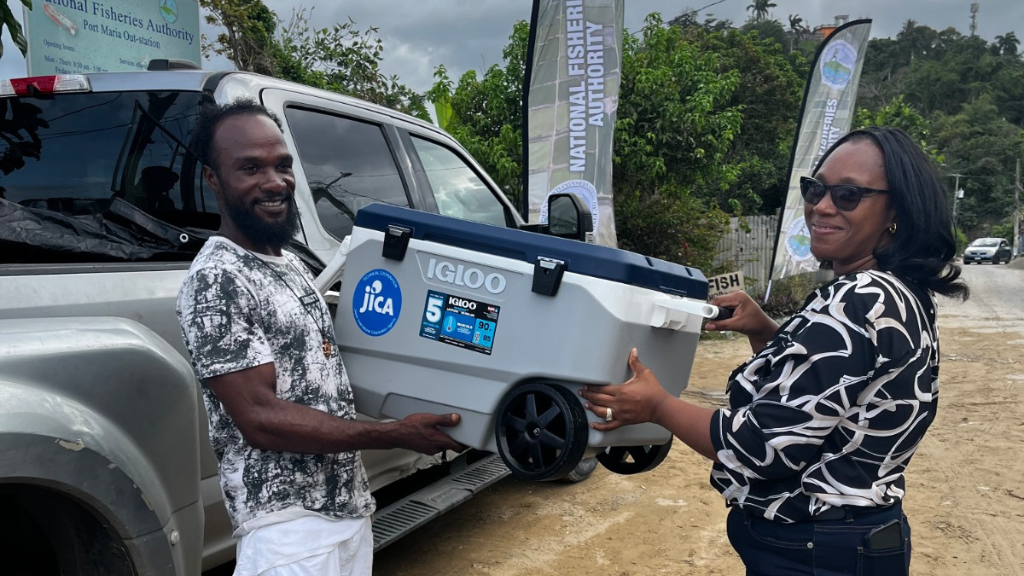
KINGSTON, Jamaica—More than 90 fisherfolk from six fishing beaches across the island have undergone comprehensive training in post-harvest practices, including immediate handling after the catch, sanitation, primary processing, and techniques to deliver a superior product to consumers.The training was done through a partnership between the National Fisheries Authority (NFA) and the Japan International Cooperation Agency (JICA).Valued at 6.6 million, the three-month training was aimed at enhancing the quality, value, and marketability of Jamaica’s fishery products.The initiative culminated in a dual-purpose ceremony held on March 18 at the NFA’s sub-office at Pagee Fishing Beach in Port Maria, St Mary, where participants received post-harvest certificates of completion alongside equipment valued at approximately 3.7 million.Minister of Agriculture and Fisheries Floyd Green, in his address, stated that one of the ways in which the Government, with the support of JICA, is addressing the inadequate handling of fish immediately after catching is through the post-harvest training.“We want to ensure that you are providing to our people the highest-quality fish and you are able to get maximum market value,” said Green.“We will be paying keen attention to see you apply what you have learned. We want to see the improved post-harvest practices from our vendors and fishers, improved quality and market value, and we want to see you pass on the skills and knowledge that you have learned,” added Green.The equipment package included igloos, stainless steel tables, knives, scrapers, and hairnets — designed to support the practical application of the skills acquired.The key fishing communities which benefited from the training were the Greenwich Town and Kingston Fishing Complex; Hunt’s Bay and Old Harbour Bay, St Catherine; Lances Bay, Hanover; Whitehouse, St James; and Pagee, St Mary.Atsushi Nakagawa, resident representative of the JICA Jamaica Office, highlighted the importance of post-harvest practices in ultimately increasing the value of fishers’ hard work in his remarks.“Improving fisheries is not only about increasing catch, but also about ensuring quality, sustainability, and resilience along the entire value chain,” said Nakagawa.As part of JICA’s technical cooperation, the agency assigned a fisheries expert to the NFA and contracted food safety consultant Allison Richards to support the implementation of post-harvest quality improvement seminars.The training programme also incorporated the food handlers’ training and tests, which David Rowe, veterinary public health inspector from Hanover, noted would have direct benefits for the businesses of fisherfolk.“The food handlers' training is critical for the fish vendors and fish handlers as it helps them to understand public health standards and also to attract more customers, and it makes good business sense for them,” said Rowe.Ayako Iizumi of the Japanese Embassy also attended one of the training sessions and highlighted Jamaica’s potential within the sector and Japan’s commitment to quality assurance.“Jamaica, as an island country, has a lot of potential in the fisheries sector. I believe that quality assurance and quality control is a necessary part of delivering fresh fish to the market. That is why JICA and the Japanese Government is supporting the training,” said Iizumi.
March 27, 2026