
0
I overcame life without parole sentence. Now more than 1,100 are poised to join me in Pa.
April 27, 2026
Posted 3 hours ago by
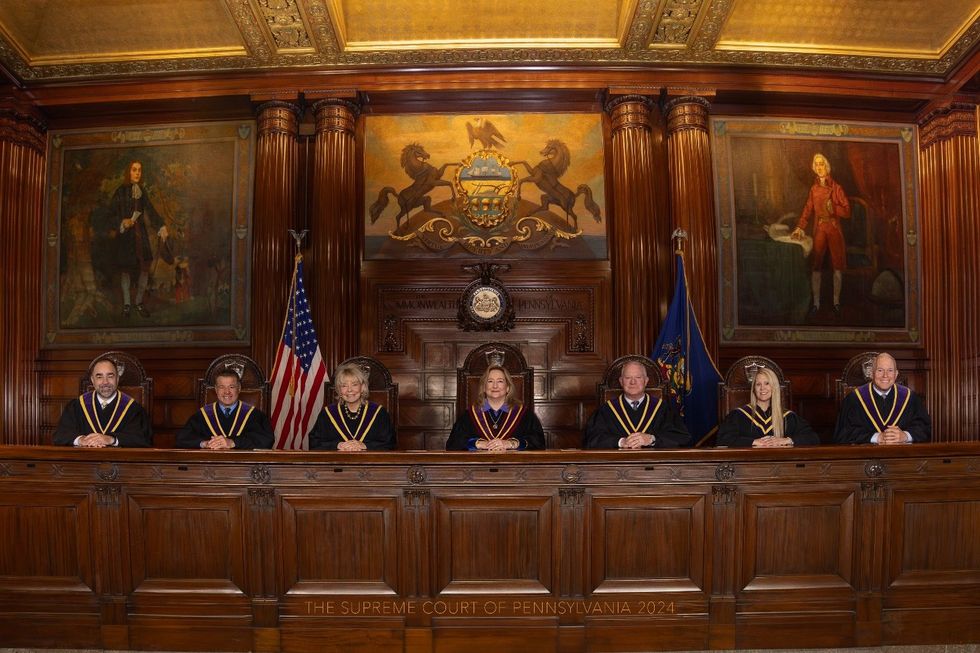
Last month, in a unanimous decision, the Pennsylvania Supreme Court ruled that mandatory life without parole sentences imposed after a conviction for second-degree (felony murder) were unconstitutional.Immediately over 1,000 people in prisons across the state learned that the sentences they are serving violates their rights under the Pennsylvania Constitution.
Some have already served over 40 years in prison.In the decision, the state’s highest court directed the Pennsylvania legislature to fashion a remedy within 120 days. The case was brought by the Abolitionist Law Center, Amistad Law Project, and Center for Constitutional Rights.I know firsthand the experience of serving an unconstitutional sentence.For 27 years, I served a mandatory life without parole sentence for my conviction as an accomplice to first-degree murder. I was a juvenile at the time of the offense, conviction and sentencing. The judge in my case was not able to take into consideration my diminished culpability in the offense or capacity for change.My sentence was only invalidated after the United States Supreme Court ruled in Miller v. Alabama that mandatory life without parole sentences were unconstitutional for people under 18. I was re-sentenced in 2017 and subsequently released in 2018.Robert Saleem Holbrook speaks at an April 2024 rally in Harrisburg during Second Chances month. (Photo courtesy of the Abolitionist Law Center)Proportionality and culpability are the foundation of any modern justice system. The consideration of those qualities are being denied to thousands of prisoners in Pennsylvania due to its mandatory life without parole sentencing schemes.The Pennsylvania Supreme Court found this to be flawed for felony murder, and more importantly to be flawed under Pennsylvania’s State Constitution, not the U.S.Constitution. For the first time, the state Supreme Court has extended a new right to be free from cruel punishment under its state constitutional protections.That is a landmark victory, not just for incarcerated people but for all Pennsylvanians who believe that constitutions exist to expand freedoms, not restrict or confine them.This was a case to celebrate.However, now it is up to the state legislature to act, and act with deliberation and speed. One of the unjust outcomes of the “juvenile lifer” re-sentencings in Pennsylvania was the vastly disparate sentences handed down across the state’s counties.In Philadelphia, District Attorney Larry Krasner’s Office assessed individual culpability, rehabilitation and parole suitability. Meanwhile, in other counties across the state, “juvenile lifers” were resentenced to life without parole or sentenced to minimum terms of 35, 40, and in some cases 50 years. Prosecutors in those counties continued to pursue heavy minimum sentences with ever-changing goal posts. In many cases, they rigidly adhered to 35-year minimum guidelines even when they didn’t have to.We cannot repeat those mistakes.To ensure we didn’t allow this to happen to people serving mandatory life without parole for felony murder, in 2024, Straight Ahead, the lobbying, legislative, and electoral arm of the Abolitionist Law Center, drafted House Bill 443, sponsored by House Judiciary Chairperson Tim Briggs.HB 443 provides a remedy that is fair and just for all Pennsylvanians and broadly supported by key stakeholders, including the Philadelphia Defenders Association, Families Against Mandatory Minimums (FAMM), the ACLU of Pennsylvania, and over a dozen other criminal justice organizations in the fight to end mass incarceration and death by incarceration and promote true public safety in Pennsylvania.The bill would provide everyone convicted of felony murder an opportunity to see the parole board. HB 443 is not a pass out of prison for all, but rather allows the parole board to take into consideration the individual’s culpability and capacity for change. It sets a 25-year minimum sentence and a 50-year maximum; however, that sentence is in line with the national average of time served for felony murder. The legislation must also be retroactive and apply to the over 1,000 people presently serving mandatory life without parole sentences for felony murder convictions.Anything less would be a travesty of justice.And any questions about public safety can be answered by looking at the recidivism rate of the “juvenile lifers” released since 2016. As of 2025, their recidivism rate is at 4, according to Montclair University research, a remarkably low figure compared to the national average. We are only now, 50 years later, undoing many of the draconian sentencing schemes that blossomed in the 1970s in the aftermath of the racially charged 1960s and the War on Drugs in the 1980-90s. Since then, these sentencing schemes have been found to disproportionately impact Black and working class communities.In short, they are racist and classist.Mandatory life without parole for felony murder, only introduced to Pennsylvania in 1974, is finally in the dustbin of our state’s history.Now the Pennsylvania legislature has the power to move swiftly to rectify the unjust sentencing scheme that violates the constitutional rights of people convicted of felony murder and condemns them to die in prison.
Raw Story
Coverage and analysis from United States of America. All insights are generated by our AI narrative analysis engine.