
0
How Trump’s Wars Might Kick Off the Next Big Refugee Crisis
April 30, 2026
Posted 4 hours ago by
As the chaos of Trump’s war on Iran and the stilted, tumultuous ceasefire negotiations drag on, the world has been watching with steep concern over the short- and long-term economic and energy ramifications. Most visibly, Iran has for weeks limited access to the Strait of Hormuz, recently attacking several ships transiting the crucial channel even as the U.S.
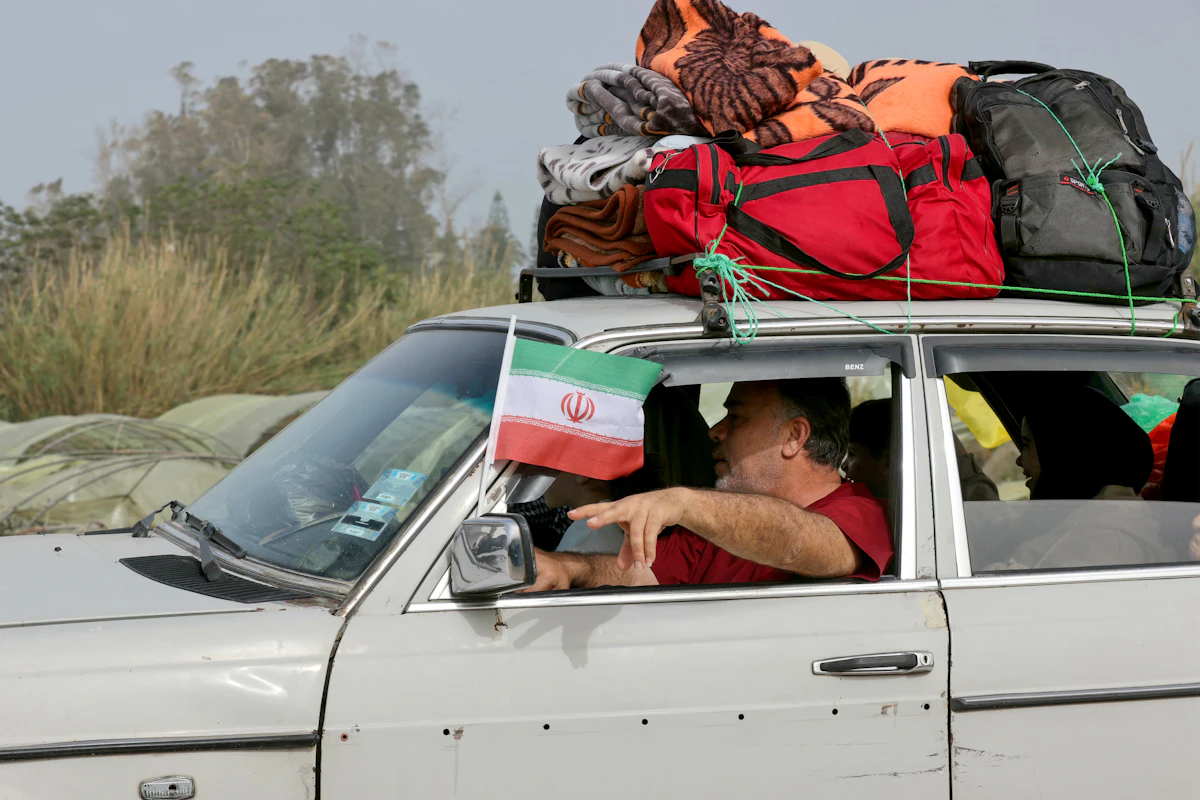
attempts its own blockade.The war has further strained U.S. relationships with global allies like the EU and Japan, and the discord has spilled over into Gulf States like the United Arab Emirates that had once considered themselves relatively insulated from regional conflicts and are now reevaluating their security, economic approach, and global ties. Beyond fuel, the conflict has led to a global shortage of fertilizer, leading to fears of food insecurity.There is, however, one dimension to the conflicts in Iran and Lebanon that has been overshadowed by the overlapping energy, military, and diplomatic crises: human displacement. Per the U.N. High Commissioner for Refugees, some 3.2 million people are already internally displaced within Iran. While a trickle has already headed to the relative safety of neighboring Turkey, this remains an issue mostly contained within Iran itself, but that could easily change under a set of very plausible scenarios.There are, broadly speaking, at least two relatively likely outcomes that could lead to significant refugee outflows from Iran: In one, the regime remains broadly in charge and viable, likely with the Islamic Revolutionary Guard Corps occupying an even more influential role in the country’s governance, and with a freer hand to to crack down far harder on pro-democracy protesters and others who may be emboldened to more publicly stake out opposition in the wake of Supreme Leader Ali Khamenei’s death and Trump’s encouragement.Prior to the start of this conflict, Iranian security forces had killed what a network of medical providers in the country estimated could be up to 30,000 people as they tamped down on public discontent and demonstrations. In a now wartime situation in which the IRGC moved to fully consolidate power as opposition groups—perhaps supported by external players like the U.S.—tried to topple the regime, millions of people could get caught in the middle and decide their best bet lay in greener pastures elsewhere. There are already parallels: Of the Iranians who have fled to Turkey, many have signaled that their decision was sparked by the regime crackdown more than by the war.In the other, more acute scenario, Trump and his allies could succeed in a campaign of making life untenable in Iran altogether. Should he follow through on promises to strike civilian infrastructure, including energy production and desalination facilities, the resulting damage could quickly make life in large parts of the country of 92 million unsustainable. After another Trump social media post promising to “knock out every single Power Plant, and every single Bridge” in Iran, U.S. Ambassador to the U.N. Mike Waltz said the threat was “perfectly acceptable” and “all options are on the table.”Naturally, this approach would fit the definition of a war crime, but that’s something the administration has been building toward for months in Iran and other theaters; the plainly illegal military strikes against alleged drug-ferrying boats in Latin American waters are continuing even now in spite of their obvious illegality. A collapse in the viability of civilian life across large swaths of Iran and the greater Middle East would trigger a much more widespread and rapid exodus, first to neighboring countries such as Iraq and Pakistan but inevitably spilling over to a broader area, including the Gulf States, Europe, and, yes, eventually the United States.In either case, while they are not direct parallels and have their own contexts, it’s instructive to look at the Syrian refugee crisis that started building up with the start of the civil war in 2011, part of the broader Arab Spring. By 2014, some 3.7 million Syrians had fled the country, mostly ending up in Turkey, Jordan, and Lebanon as Western governments pledged to take limited numbers of refugees while committing significant funding to effectively pay other countries to help accommodate them (though they still received asylum-seekers who arrived outside of standard refugee channels).At the time, Lebanon absorbed over a million Syrian refugees, many of whom remain there. Now, not only is Lebanon likely incapable of accommodating additional outflows, it is itself on the verge of destabilization as Israel’s attacks and demands for the functionally impossible Lebanese disarmament of Hezbollah spark fears of civil war. In that scenario, some portion of the Syrian refugees already there would be likely to pick up and move on again, along with some number of Lebanese themselves.Where would they go? While Turkey took in the largest number of Syrian refugees during the peak of the crisis and has already received some Iranians, Ankara has been cracking down on “irregular” migration flows. Last month, Interior Minister Mustafa Ciftci said that the country was drawing up plans to contend with Iranian outflows, including potential border buffer zones. He added that Turkey was prepared to accommodate “up to 90,000 people” in the event of a sudden influx, which is, in the context of the total collapse of a country four times the size of Syria, a paltry number. The Gulf States, having been targets of Iranian military strikes and with a generally hostile posture toward refugees, are unlikely to step up; they infamously declined any formal Syrian refugee resettlement, instead absorbing some through myriad temporary programs.Aside from the pure practicalities of a potential refugee crisis, migration in the mid-2010s, from Syria and elsewhere, more or less reshaped politics globally. Fears of mass migration and its (real or imagined) cultural and economic consequences were arguably the preeminent driver of the resurgence of a new far right in Europe and at least a part explanation for specific policy outcomes like Brexit, despite what were comparatively tiny numbers of resettlements. In the United States, immigration hysteria was the main foothold for the first Trump campaign, and the post-Covid so-called migrant crisis of asylum-seekers arriving at the southern border became a dominant narrative in the lead-up to the 2024 election despite border arrivals falling to four-year lows in the run-up to voting.Even the relatively middling post-withdrawal resettlement of Afghans who had literally assisted in the U.S. war effort and civil society building in Afghanistan sparked backlash among the MAGA crowd, which spread to the remaining moderate GOP, particularly after a mass shooting by an Afghan asylee last year. Now the Trump administration is reportedly planning to send some Afghan refugees who have been stranded on a U.S. base in Doha, Qatar, to Congo. If that’s the plan for wartime allies, I don’t imagine there’ll be much effort to assist Iranians the administration has spent weeks demonizing. If Trump’s catastrophic decisions in Iran and inability to rein in Israel’s attacks on Lebanon spark a refugee crisis, he’s likely to try to use that to his advantage to regain public opinion ground lost, including on immigration, by fearmongering about refugees.Already, Trump has set something of a trap for pro-immigrant advocates and political opposition, similar to the one created by his Title 42 restrictions during his first term: Humanitarian migration has been effectively shut off entirely, which makes even a return to the status quo of accepting asylum applications at all seem like a bleeding-heart capitulation by comparison. That’ll be especially severe in a situation where Trump engineers significant additional global need for refugee resettlement. Ideally, that won’t happen, but now’s the time for civil society and liberal leaders here and in EU capitals to think through a humane response—and to understand that a right-wing backlash is primed.
The New Republic
Coverage and analysis from United States of America. All insights are generated by our AI narrative analysis engine.