
0
Giro d'Italia: A brief history of Italy's Corsa Rosa
May 9, 2026
Posted 2 hours ago by
This year's event takes place from 8-31 May and will conclude in Rome. The Giro d'Italia - the Tour of Italy - is one of professional cycling's three Grand Tours and among the most historic events in sport. The first edition was held between 13 and 30 May 1909, organised by the Italian sports newspaper La Gazzetta dello Sport. It was a gruelling eight-stage competition covering 2,447 kilometres, with Italian cyclist Luigi Ganna claiming the title of the first-ever Giro champion.
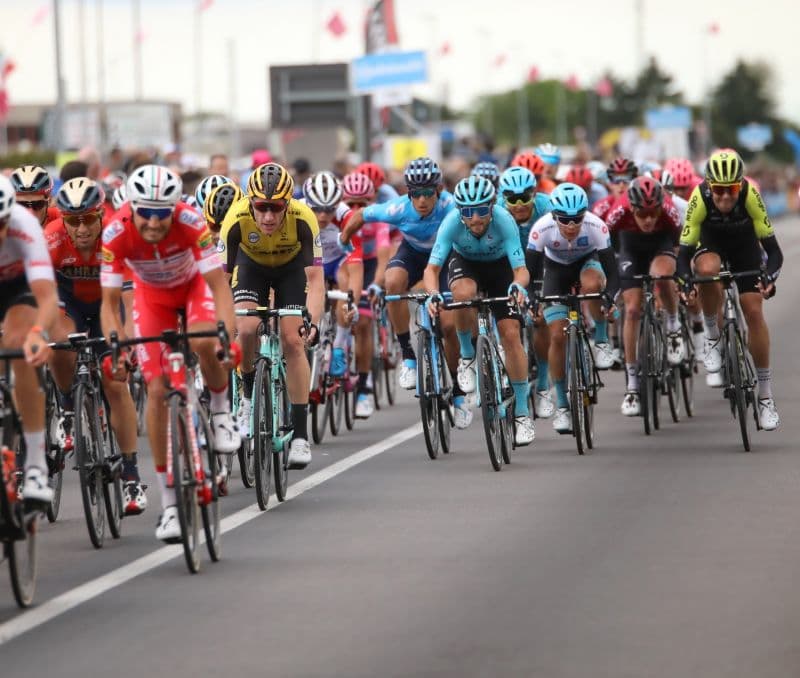
Origins The impetus for the race came in August 1908, when La Gazzetta editor Tullo Morgagni sent an urgent telegram to his cycling editor Armando Cougnet calling for the creation of an Italian tour. The move was partly defensive: a rival newspaper was on the verge of launching its own Italian cycling stage race, and so the Gazzetta announced the Giro d'Italia for May 1909. The idea was inspired by the success of the Tour de France, which had begun in 1903. The race has been held annually since that first edition, interrupted only by the two world wars. As the Giro grew in popularity it was lengthened and broadened in scope, evolving from a largely domestic Italian affair into a truly international competition. One of the Giro's greatest symbols, the maglia rosa - the pink jersey worn by the overall leader - was introduced in 1931, its colour honouring the pink-tinted pages of La Gazzetta dello Sport. Champions The race produced a succession of legendary champions. The dominant figure of the 1920s was Alfredo Binda, who at the height of his powers was so dominant that La Gazzetta called him to their offices in 1930, accused him of ruining the race, and offered him money to be less dominant - which he refused. The post-war era saw one of sport's great rivalries, as Gino Bartali - the Iron Man of Tuscany - was challenged and ultimately surpassed by his 20-year-old teammate Fausto Coppi, who defeated him at the last pre-war Giro in 1940. In 1952, Coppi became the first cyclist to win the Tour de France and the Giro in the same year. Belgian Eddy Merckx was the dominant figure of the 1970s. His first victory came in 1968, and he went on to win the race five times in total, including three consecutive victories from 1972 to 1974 - the record for the most successive wins in the Giro. Alfredo Binda, Fausto Coppi and Eddy Merckx jointly hold the record for the most Giro victories, each having won the competition five times. Landmark moments The modern era has produced its own landmark moments. Swiss Hugo Koblet became the first non-Italian to win the race in 1950. Ireland's Stephen Roche won in 1987 as part of a remarkable treble that also included the Tour de France and the World Championship in the same season. Slovenia's Tadej Pogačar dominated the 2024 edition on his first participation, winning six stages and claiming the overall title with authority, confirming his status as one of the most complete riders of the modern era. British cyclist Simon Yates won the 2025 edition, securing the maglia rosa after a decisive final mountain phase. 2026 The 109th edition of the race is currently under way. The 2026 Giro d'Italia started on 8 May in Nessebar, Bulgaria, and will conclude on 31 May in Rome. For the first time in the race's history, the Grande Partenza - the grand departure - is taking place in Bulgaria, marking the 12th foreign country to host the opening of the race. The Rome finale marks the 51st time the race visits the Italian capital, and the eighth time it serves as the grand finale. The final stage will see riders race through the city's most iconic landmarks, with an intermediate sprint by the Colosseum before finishing at the Circus Maximus. Photo credit: ChiccoDodiFC / Shutterstock.com
Wanted in Rome
Coverage and analysis from Italy. All insights are generated by our AI narrative analysis engine.