Formula 1’s Engine Troubles Come To A Head In Japan
March 30, 2026
Defector
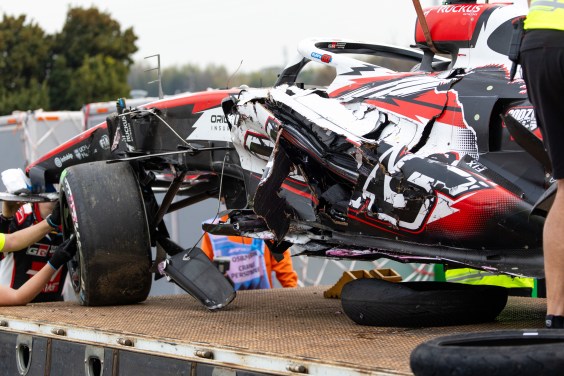
Formula 1 has a qualifying problem. This, the FIA acknowledges—that the new power unit regulations have resulted in unfortunate and confusing qualifying laps in which the cars physically cannot go, by some definitions, as fast as possible. The actual racing, however, is more in dispute. At the Chinese GP two weeks ago, the new engine specifications and overtake mode were a considerable success for racing; by the fickle nature of F1, the Japanese Grand Prix this Sunday proved that they are a disaster.
One crash is all it takes. The issues in racing, too, stem from the new power unit regulations. While power units under previous rule sets were also hybridized, this year's have shifted from a roughly 85-15 percentage split in provided power between the internal combustion engine (ICE) and electric motor (MGU-K, which alternately charges or deploys battery energy) to a 50-50 split. To get into the nitty gritty numbers, cars can regenerate roughly 8.5 MJ of energy over the course of a lap—that is, roughly 8.5 MJ of energy, as the precise amount varies depending on track, session, and race state—but can only store up to 4 MJ of energy at any given time. F1 cars, then, have to deploy and recharge battery at optimal points over the course of a lap, whether on the straights or in the corners. (As always, Chain Bear has a helpful video visualization of the phenomenon.) Combined, this battery cycle and power split has resulted in some funky and fresh issues: superclipping, energy starvation, and software-dependent energy deployment. Ordinarily, hybrid engines recharge their batteries in braking zones, where the MGU-K converts the kinetic energy of the car into electric energy. The MGU-K can also be programmed to steal power from the ICE to charge the battery while the car is still at full throttle on a straight, resulting in a massive drop in straight-line speed—the dreaded superclipping phenomenon.
Defector
Coverage and analysis from United States of America. All insights are generated by our AI narrative analysis engine.