
Five standout denunciations and warnings in Pope Leo XIV's new papal encyclical
Narrative Analysis: Transfer
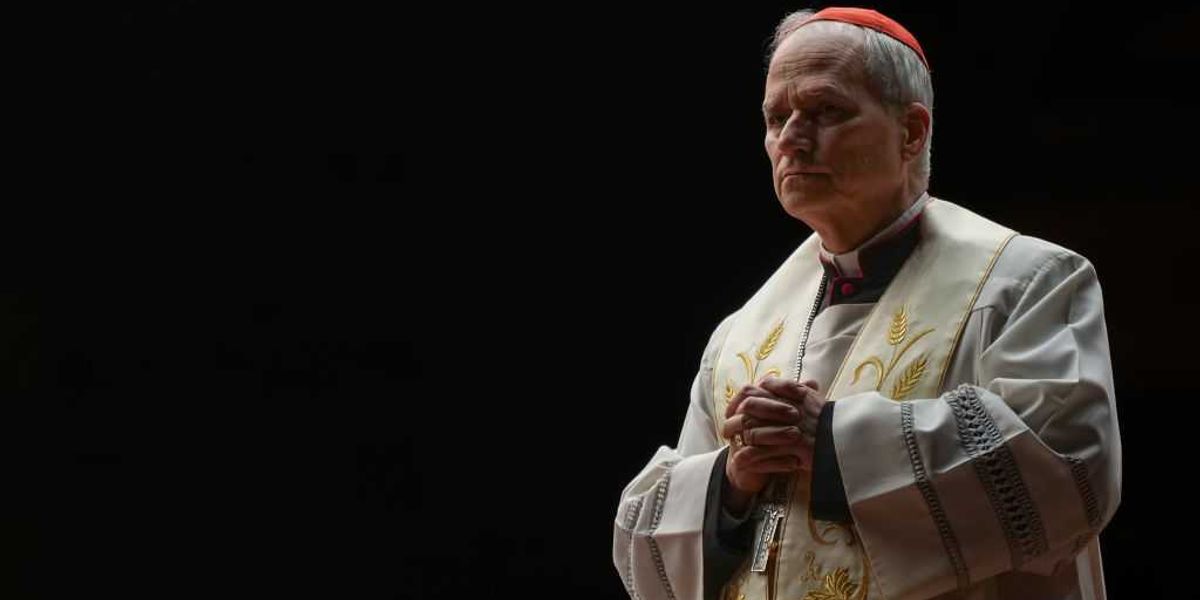
Pope Leo XIII issued a papal encyclical in 1891 titled Rerum Novarum, which the Vatican notes became the document inspiring Christian activity in the social sphere and the point of reference for this activity.In that groundbreaking document about the just ordering of society, Leo XIII applied Catholic doctrines to the modern conditions that manifested as a result of the Industrial Revolution.Besides rejecting socialism as a means of remedying social ills and setting the stage for localism, the late pope expounded on the Church's doctrine on work, private property, the rights of workers, the obligations of the rich, the dignity of the poor, and other timely terms and issues.'It can only bring about conflict more quickly and render it more impersonal.'The current pope, Leo XIV, has set out in his first encyclical, Magnifica Humanitas, to do for his era what his predecessor did 135 years ago.The Roman pontiff has, accordingly, scrutinized the great trends of our time, particularly technological advances, through the lens of the Church’s Scripture- and tradition-based social doctrine — that living legacy of wisdom, where we find principles for thought, criteria for discernment and judgment, and concrete guidelines for action.While the pope covers a great deal of ground in his encyclical, five remarks stand out as especially provocative and/or memorable.1. The two citiesAt the outset, Pope Leo XIV raises the questions of where man is going and toward which goal does he wish to orient himself.Leo XIV notes that in the era of AI, mankind is faced with a choice — not whether or not to embrace technology, which he does not regard as a force intrinsically antagonistic to humanity — but of whether to construct a new Tower of Babel or to build the city in which God and humanity dwell together.RELATED: It’s not easy being pope — Leo's big new tech encyclical proves it Alessandra Benedetti - Corbis/Corbis/Getty ImagesThe American pope suggested that the choice will inevitably dictate how the transformative technology of the age is employed, given that this technology takes on the characteristics of those who devise, finance, regulate, and use it.Following in the footsteps of Nimrod and choosing the first option would mean giving way to an ancient temptation and pursuing a single language, a single technology, a single direction; building a society on pride and the claim to self-sufficiency; and working toward a future that excludes God and reduces the other to a means.The second option would similarly mean dominating the heavens but rather patiently cultivating a space in which humanity rediscovers its solid foundations and its final end — a place less visible and less spectacular that is founded on the common good and has for its bedrock a firm relationship with the Almighty.Building for the common good necessitates resisting the Babel syndrome that animates transhumanism and other vainglorious efforts to correct what God has created and instead accepting the limits and weakness of humanity without considering them an error to be corrected, said the pope.2. Falling victim to achievementLeo XIV observed that within the ascendant technocratic paradigm previously denounced by Pope Francis, there is a tendency to let the logic of efficiency, control, and profit alone shape personal, social, and economic decisions.'Speed and efficiency should never be the supreme motivating force for the irreversible decisions.'This contagious way of looking at the world — which threatens to reduce creation to an object of exploitation and human beings to mere cogs in a system driven toward ever greater efficiency — has spread in concert with the expansion of artificial intelligence, cognitive science, nanotechnology, robotics, and biotechnology, said the pope.Pope Leo XIV warns that unless technological progress advances with corresponding ethical and social progress, the result may be an increase in means without a growth in humanity: 'having more' without 'being more.'3. More dehumanization on the battlefieldSensitive to the increasing ease of war-making, tragically marginal efforts to prevent conflicts, and the perpetuation of conflict as a source of power and income, the pope discussed the need to rein in and regulate the use of AI where the battlefield is concerned.Leo XIV noted that moral judgments of a lethal or irreversible nature cannot be reduced to calculation and should not be entrusted to artificial systems.RELATED: Killer drones have conquered the skies. Can we ever be safe again? ANDREW CABALLERO-REYNOLDS/AFP/Getty ImagesLeaving the work of killing and ruination to machines neither makes war more morally acceptable nor removes the intrinsic inhumanity of conflict, said the pope; rather it can only bring about conflict more quickly and render it more impersonal, lowering the threshold for resorting to violence, transforming defense into threat prediction and thus reducing victims to data.'Decisions now seem to be driven almost exclusively by economic calculations, justified through media distortions.'Where AI and automated systems are involved, the pope advocates for:holding those who design, train, authorize, and employ the technology used in strikes accountable;ensuring that speed and efficiency should never be the supreme motivating force for the irreversible decisions made in the context of war;requiring technology that facilitates attacks to distinguish between combatants and noncombatants and factor in the impact on defenseless populations;requiring weapons systems to retrace and reconstruct their decision-making processes so that accountability and blame are not collapsed into 'the machine';keeping decisions to use lethal force under human control; andavoiding an international AI arms race.Leo XIV notes, While AI can enhance the defense and protection of civilians, it can also lower the threshold for the use of force, shield people from responsibility, and foster a culture in which the enemy is reduced to a statistic and the victim to 'collateral damage.'4. The new colonialismAfter noting that the Church renews her firm condemnation of all forms of slavery, trafficking, and the commodification of persons, Leo XIV discussed a novel form of colonialism incubated in the digital economy that appropriates data, transforming personal lives into exploitable information.The pope railed against the mining, aggregation, and analysis of individuals' data — especially information about their health and genetics — noting that such information affords the powers that be structural leverage over the future, for they can shape needs and markets. They can also decide, before others, to whom medicines, investments, and protections will be allocated.The remedy, according to the pope: restore to individuals not only the data that describes them, but also the ability to decide how it is used, by whom, and for whose benefit.5. A false realismThe pope rails in his encyclical against realpolitik — politics based on doing what is regarded as expedient rather than what is understood as morally or ethically right — particularly as it relates to war.Leo XIV, certain that we live at a time of significant spiritual and cultural blindness, characterized realpolitik as a truly irresponsible form of false realism that sows in consciences and in society an attitude of resignation to the inevitability of war and dismisses peace and dialogue as utopian or irrational positions that ignore the risks at stake.While stressing that peace is neither a naïve hope nor merely the absence of war and is always possible as the fruit of justice and charity, the pope recognized that the prevailing climate of pragmatism and nihilism has nevertheless set the stage for new wars that are perhaps even more dangerous than those of the past, since they tend to disregard all ethical limits.Decisions now seem to be driven almost exclusively by economic calculations, justified through media distortions, manufactured enthusiasm, and 'dreams' that inevitably shatter, generating frustration and further violence, wrote the pope. When people come to believe that nothing is genuinely true and that principles are hollow words, then the fuse in their hearts is lit for new eruptions of intolerance and aggression.Just as he rejects this false realism, the pope rejects the encompassing culture of power, highlighting an alternative: the civilization of love.Christians see the darkness and acknowledge it for what it is, yet they do not merely gaze upon it passively, for they know the light and understand that the darkness has not overcome it and cannot defeat it (cf. Jn 1:5), wrote the pope. For this reason, even when suffering seems to have the last word, Christians serve the good and are sustained by a theological hope that gives reality both meaning and direction.Like Blaze News? Bypass the censors, sign up for our newsletters, and get stories like this direct to your inbox. Sign up here!
Narrative Intelligence Brief
This article was published by Conservative Review, a source frequently categorized with a right bias based in United States of America. Our narrative intelligence engine continuously monitors coverage from this outlet to track framing, bias, and rhetorical patterns. In this specific piece, our systems detected the potential use of the "Transfer" technique. This narrative approach is often used to shape reader perception by highlighting specific emotional or rhetorical angles. By understanding the editorial perspective of Conservative Review, readers can better contextualize the information presented and compare it across our broader media matrix to find the real narrative.
Explore related topics: Stay informed with Real Narrative News as we track unfolding stories. Dive deeper into our coverage of pivotal topics including white house, عيد الأضحى, iran war, donald trump, جنوب لبنان, supreme court, eid aladha, ebola outbreak, ken paxton, and james talarico. Our intelligence streams continuously monitor these keywords to bring you unbiased analysis and real-time updates on topics like "Five standout denunciations and warnings in Pope Leo XIV's new papal encyclical".
More from Conservative Review
May 27, 2026
'Hot' Chelsea Handler digs up dirt from Tony Hinchcliffe, Shane Gillis ex-files
May 27, 2026
Judge Hands Russia Hoaxer Marc Elias Major Loss By Upholding Florida’s New Congressional Map
May 27, 2026
Mullin threatens to block flights into sanctuary cities after Democrats interfere with ICE
May 27, 2026
Whitlock blasts NAACP for ‘victimology’ message targeting young black athletes
May 27, 2026
The Trump Administration Proposes A Big Expansion Of Hunting Rights On Public Lands
Reliability Insights
P
Technique: Transfer
System analysis detected use of specific narrative techniques in this piece.Analysis Methodology
This narrative analysis was generated using the CoDataLab Global Intelligence Engine. Our proprietary AI scans thousands of cross-border sources to identify sentiment patterns, framing techniques, and potential media bias. While AI provides the data-driven foundation, our objective is to empower readers with additional context beyond the standard headline.The content displayed above is a structured summary designed for rapid information processing. For the full original report, please visit the source outlet.More Coverage
Discussion