
Ed Miliband's Net Zero blitz driving investment of 'Britain's greatest industrial asset' abroad
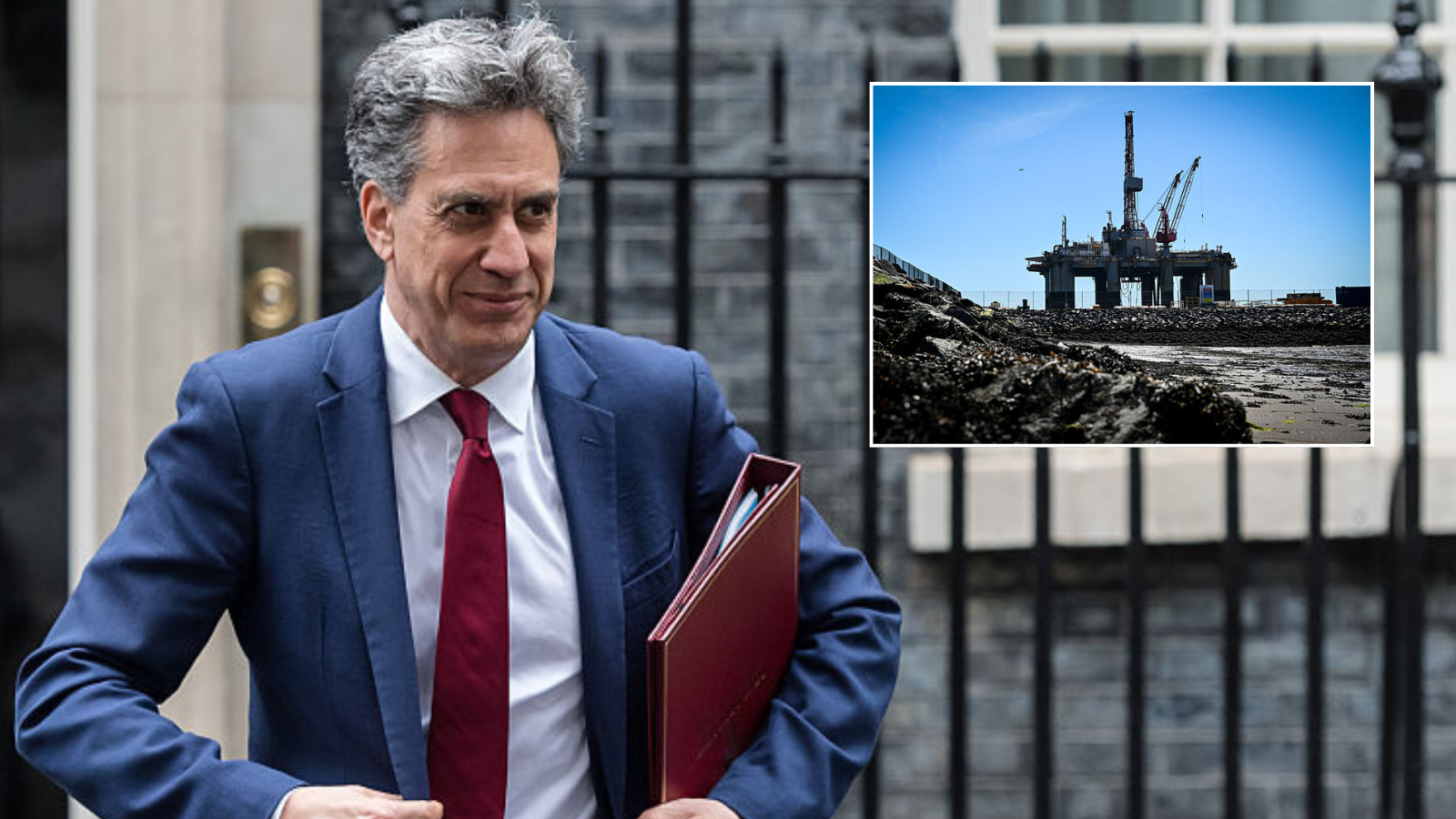
The North Sea is one of Britain's “greatest industrial assets” — but an increasingly polarised fight over its future is driving investment abroad, experts have warned. It means the sector is suffering a brain drain of expertise, even though the very same skills are needed to drive the renewables market, as Labour pledges to ban any new licences for oil and gas drilling to alleviate the worsening climate crisis”.Research revealed more than nine in ten companies believe the North Sea has a viable long-term future, but only if Whitehall “introduces the right fiscal and regulatory frameworks”. However, after the Energy Independence Bill was announced in the King’s Speech earlier this month, Energy Secretary Ed Miliband stated: “After the second fossil fuel crisis in half a decade, our clean power mission is the only way to bring down bills for good and take back control of our energy.” TRENDING Stories Videos Your Say Drilling at Rosebank, the UK's largest untapped oil field, and Jackdaw, a giant gas field, has been stalled after legal objections on climate grounds. Both are licenced fields, but the final decision falls to Mr Miliband. His Department for Energy Security and Net Zero has repeatedly insisted more North Sea drilling will not bring down bills because the price of oil and gas is set by the global market. Meanwhile, North Sea operators continue to face a windfall tax introduced by the Conservatives after the war in Ukraine, meaning they pay out 78 per cent of profits. In its Energy Transition Report, Aberdeen Grampian Chamber of Commerce (AGCC) warned the country was in danger of “accelerating the decline of the North Sea unnecessarily”. Opponents of North Sea drilling have argued there simply is not enough oil left to justify further exploration, although the offshore sector believes there could be 7.5 billion barrels still recoverable – almost double the Government's estimates. The Energy Transition report found 93 per cent of businesses either agree or strongly agree that there is still a future for oil and gas activity in the North Sea with the right frameworks in place. This finding alone “directly challenges the growing political narrative that the future of the basin is already decided”, says the AGCC.Russell Borthwick, Chief Executive of the AGCC, said: “For several years now, the dominant political narrative has increasingly suggested that the future of the North Sea is already decided. This report tells a very different story.”The report foreword warns: “It’s clear that energy security needs to be at the centre of national economic policy. Simultaneously, increasingly polarised debate surrounding the future of the North Sea continues to create uncertainty across investors, operators and the wider supply chain.” The report, launched this morning in Aberdeen, reflected the views of 121 organisations linked to the sector, including seven North Sea operators. Respondents predicted that, in less than five years, domestic revenues will be overtaken by overseas markets, such as Norway, as the main source of income. Fewer than one in ten believed that the UK would have “sufficient skills to deliver its energy transition ambitions” if current trends continued. Nearly nine in ten said new licences should be granted “where operators can demonstrate lower emissions than imported alternatives and deliver greater UK economic value”.LATEST DEVELOPMENTSEnergy chiefs urge Labour to 'prioritise North Sea oil' following emergency talksThousands of North Sea oil jobs lost in just one year, damning new figures showLabour blamed for delaying 100 million barrels of North Sea oil as investment 'could collapse before 2030'Mr Borthwick added: “The overwhelming majority of businesses operating across the energy sector still believe there is a future for the basin if the UK creates the right fiscal and regulatory conditions to support it. What companies are questioning is not the capability of the North Sea but whether the UK is still competitive enough to attract the investment required to deliver that future. “The North Sea remains one of the UK’s greatest industrial assets. The same workforce, engineering expertise and supply chain capability built over the last five decades will also be critical to delivering offshore wind, carbon capture, electrification and wider transition infrastructure. “But investment follows stability, and right now, too many businesses believe the UK is losing ground to international competitors offering clearer policy, faster consenting and more predictable long-term conditions. The message from industry is becoming increasingly clear – you cannot deliver energy security, economic growth and the energy transition while simultaneously hollowing out the industrial base required to achieve all three.” The report recommends a “more balanced approach” to lifecycle emissions and allowing work to restart at Jackdaw and Rosebank, two fields that have been halted on climate grounds. It wants the Energy Price Levy, or windfall tax, replaced immediately with the more flexible Oil Gas Price Mechanism.The EPL currently stands at 78 per cent of profits. It suggests changes to transmission charges to make offshore wind projects in Scotland more commercially viable and an acceleration of planning, consenting and grid delivery to reduce delays to nationally significant energy infrastructure. Nicola MacLeod is General Counsel Head of Corporate Affairs at D2Zero, which sponsored the report. She said: “The findings of this report reinforce that businesses continue to see enormous long-term opportunity in both the future of the North Sea and the wider energy transition. “What is particularly striking is that 93 per cent of respondents still believe there is a future for oil and gas activity in the basin if the right fiscal and regulatory conditions are put in place. That demonstrates continued confidence not only in the capability of the region, but in the role the North Sea can continue to play in supporting energy security, economic resilience and the transition to lower-carbon energy.”David Wilson, Aberdeen Office Managing Partner at Johnston Carmichael, a co-sponsor, commented: “This year’s findings reinforce the growing disconnect between the long-term opportunity which still exists across the North Sea and the level of confidence businesses currently have in the UK as a place to invest. The North-east of Scotland retains one of the most highly skilled energy workforces anywhere in the world alongside decades of globally recognised offshore engineering expertise.These are precisely the capabilities required to deliver the next generation of energy infrastructure. The findings also reinforce the growing industry view that this should not be framed as an ‘either/or’ debate. “Most businesses recognise the need to accelerate lower-carbon technologies while also recognising the continuing importance of domestic oil and gas production, energy security and industrial competitiveness during what will inevitably be a multi-decade transition. What industry is ultimately seeking is confidence that the UK remains an attractive place to invest, innovate and build long-term energy capability.” A spokesman for the Department for Energy Security and Net Zero said: “Oil and gas production will be with us for decades to come, and we will manage existing fields for the entirety of their lifespan – while actively scaling up clean energy industries in the North Sea. Our ambitious plans will make the North Sea a clean energy powerhouse and support up to 40,000 new jobs in Scotland by 2030.”Our Standards: The GB News Editorial Charter
Narrative Intelligence Brief
This article was published by GB News, a source frequently categorized with a lean right bias based in United States of America. Our narrative intelligence engine continuously monitors coverage from this outlet to track framing, bias, and rhetorical patterns. Our initial algorithmic scan of this specific piece did not flag high-confidence rhetorical techniques, suggesting a generally straightforward reporting style or neutral framing. By understanding the editorial perspective of GB News, readers can better contextualize the information presented and compare it across our broader media matrix to find the real narrative.
Explore related topics: Stay informed with Real Narrative News as we track unfolding stories. Dive deeper into our coverage of pivotal topics including عيد الأضحى, supreme court, donald trump, eid aladha, camp david, crystal palace, earnings transcript, real madrid, iran war, and roland garros. Our intelligence streams continuously monitor these keywords to bring you unbiased analysis and real-time updates on topics like "Ed Miliband's Net Zero blitz driving investment of 'Britain's greatest industrial asset' abroad".
More from GB News
May 26, 2026
ITV Coronation Street's Alan Halsall 'splits' from girlfriend as actor makes telling social media move
May 26, 2026
Naomi Osaka sets record straight on hosting French Open 'Black Party' after stinging backlash
May 26, 2026
As Brits swelter in 35°C heatwave, Shark £130 handheld fan that 'instantly' cools skin by 9ºC is SOLD-OUT
May 26, 2026
HMRC alert: Thousands of parents making Child Benefit error after £60,000 rule change
May 26, 2026
'These boys are criminals!' Tory frontbencher outraged at teens spared jail over rape amid sentence review
Analysis Methodology
This narrative analysis was generated using the CoDataLab Global Intelligence Engine. Our proprietary AI scans thousands of cross-border sources to identify sentiment patterns, framing techniques, and potential media bias. While AI provides the data-driven foundation, our objective is to empower readers with additional context beyond the standard headline.The content displayed above is a structured summary designed for rapid information processing. For the full original report, please visit the source outlet.More Coverage
Discussion