
0
Ebola outbreak raises alarms about Trump's global health moves
May 21, 2026
Posted 1 hour ago by
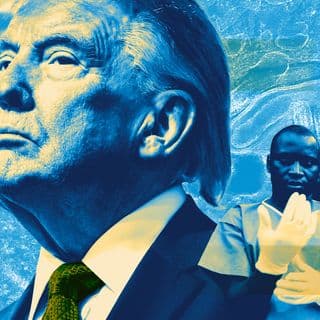
The U.S. response to the Ebola outbreak is drawing new warnings from public health experts about the impact of the Trump administration's global health policies, including the dismantlement of USAID and its withdrawal from the World Health Organization.Why it matters: While officials are rushing to get resources to stricken parts of Africa, infectious disease experts fear the administration's other actions are weakening critical networks needed for a rapid response in a densely populated, politically unstable part of the world.
Analysis Methodology
This narrative analysis was generated using the CoDataLab Global Intelligence Engine. Our proprietary AI scans thousands of cross-border sources to identify sentiment patterns, framing techniques, and potential media bias. While AI provides the data-driven foundation, our objective is to empower readers with additional context beyond the standard headline.The content displayed above is a structured summary designed for rapid information processing. For the full original report, please visit the source outlet.They're also worried that the impact of those changes — along with cuts to the Centers for Disease Control and Prevention — might not end with the Ebola outbreak.They point to a planned overhaul of the President's Emergency Plan for AIDS Relief that would reduce the CDC's role in the global HIV program.Driving the news: The Ebola outbreak — which has resulted in almost 600 suspected cases and 139 deaths — is already increasing tensions between the U.S. and WHO. WHO director general Tedros Adhanom Ghebreyesus defended the Ebola response on Wednesday after Secretary of State Marco Rubio told reporters on Tuesday that the global health organization was a little late identifying the virus.Tedros said the comments may have been due to a lack of understanding about how the WHO works, noting that the organization provides technical support to government health agencies that are responsible for disease tracking.WHO officials also said countries should focus on public health measures like contact tracing instead of travel bans like the U.S. imposed this week on non-citizens who have been in the Democratic Republic of Congo, Uganda or South Sudan in the previous 21 days.Between the lines: Infectious disease experts say an effective response goes beyond shipping protective equipment and building isolation facilities. They say it's also important to build trust with stricken communities and convince residents to do things like changing burial practices to avoid superspreader events.You need meticulous bread-and-butter public health, former CDC director Tom Frieden, who led the agency during the 2014–2016 Ebola outbreak in Africa, said Wednesday during a MedPage Today webinar. Every hour of delay allows the virus to get ahead of us.While Frieden said it was simplistic to tie Trump administration actions to late detection of the virus, he said the dismantlement of USAID, the withdrawal from the WHO and deep cuts to CDC staff delivered a 1-2-3 punch to global health architecture.Some critics suggested the administration is doing 11th-hour face-saving after hollowing out agencies that deliver international aid and cutting budgets.The International Rescue Committee, a humanitarian aid organization, said the U.S. funded a wide range of range of preparedness measures in the Democratic Republic of Congo before 2025, including treatment for communicable and non-communicable diseases. Funding cuts have left the region dangerously exposed, Heather Reoch Kerr, the group's country director for the DRC, said in a statement.The sharp rise in reported cases over the last few days reflects the reality that surveillance systems are now catching up with transmission that has likely been occurring for some time.The other side: The Trump administration says it has built a robust system of screening and monitoring for the virus since the 2014 outbreak and has partnerships on the ground that are having a multiplier effect.It's funding up to 50 frontline treatment clinics and surging the delivery of protective equipment and diagnostics. The CDC also has about 130 staff in Uganda and Congo aiding in the response.The agency is working with international partners and ministries of health on this evolving situation and is supporting response efforts through its country offices in the DRC and Uganda, Department of Health and Human Services spokesperson Andrew Nixon said in a statement. What we're watching: Whether the unfolding crisis strengthens international cooperation on infectious disease outbreaks.In the afflicted areas, we're also watching whether the fear of contracting Ebola keeps people from going to clinics and shuts down local health systems. Frieden noted that this happened during the 2014 outbreak and resulted in many malaria deaths.
Analysis Methodology
This narrative analysis was generated using the CoDataLab Global Intelligence Engine. Our proprietary AI scans thousands of cross-border sources to identify sentiment patterns, framing techniques, and potential media bias. While AI provides the data-driven foundation, our objective is to empower readers with additional context beyond the standard headline.The content displayed above is a structured summary designed for rapid information processing. For the full original report, please visit the source outlet.Narrative Intelligence Report
Our AI engine has processed this content to identify structural patterns, rhetorical techniques, and underlying sentiment.
Source Credibility
This article aligns with typical narrative patterns from its source. Our engine suggests evaluating this piece with awareness of its detected rhetorical framing.
Axios
Coverage and analysis from United States of America. All insights are generated by our AI narrative analysis engine.