
Driverless taxis could make London's congestion crisis worse as concerns widen over new tech
Narrative Analysis: Card Stacking
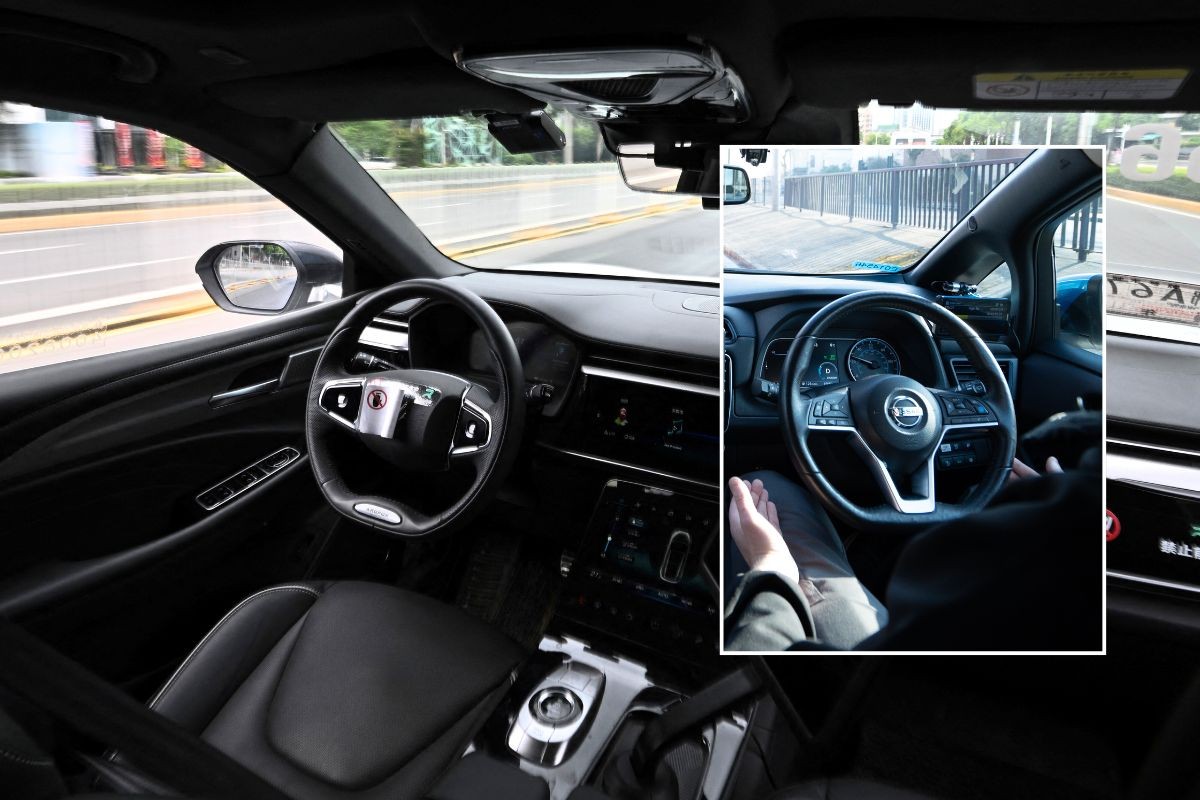
Transport experts have warned that driverless taxis could make congestion worse in London unless the technology is carefully managed.Speaking at a London Assembly Transport Committee meeting this week, specialists questioned whether robotaxi services planned by firms such as Uber and Wayve would actually help meet the capital's transport needs.Former Transport for London strategy director Thomas Ableman said too much attention was being given to safety while more important questions were being ignored.The worry I have is almost that because our starting question is always, are these safe? We therefore move away from the question of whether they are useful, he told the committee. TRENDING Stories Videos Your Say Mr Ableman argued that London should decide how autonomous vehicles are used rather than allowing private companies to dictate their role. He pointed to Oslo, where self-driving vehicles are already being used as part of the transport network and carry the Ruter livery, denoting their purpose as a public transport body.The former TfL director said there was no reason autonomous vehicles had to be run purely for commercial gain. Instead, he argued that TfL should identify where driverless vehicles could improve transport and then hire operators to deliver those services, while experts have warned of traffic concerns.Mr Ableman added: I'm not totally convinced that adding a whole fleet of zero occupancy vehicles is going to make London's transport network more efficient and effective.Professor Glenn Lyons of UWE Bristol also raised concerns about the direction of travel, suggesting London had little control over whether the technology is introduced.He said the capital appeared to have a gun to its head because licensing decisions would ultimately be controlled by the Department for Transport. The panel discussed the problem of deadheading, which occurs when vehicles travel without passengers between jobs, which could add to congestion.LATEST DEVELOPMENTSLabour confirms huge update on plans to force elderly drivers to take mandatory eye testsBYD confirms huge UK rollout of revolutionary tech that charges electric cars in just FIVE minutesNew in-car restrictions to crack down on driving offences under fresh plansHowever, experts said autonomous vehicles could bring benefits to outer London boroughs where public transport options are limited. Conservative Assembly Member Keith Prince suggested trials could be useful in areas such as Havering and Redbridge, where residents often struggle to travel between suburban destinations. Professor Jack Stilgoe, of UCL, said London had a unique opportunity to help shape global rules for self-driving vehicles, but warned that companies should not be able to mark their own homework.He called for firms to be forced to share information on near-misses and other incidents rather than only reporting crashes.Dr Nick Reed, founder of Reed Mobility and a member of the Department for Transport's Science Advisory Council, backed calls for tougher reporting requirements. He warned there was a massive asymmetry between the technical knowledge held by autonomous vehicle companies and the information available to regulators. The experts also raised concerns about the security implications of Chinese-made autonomous vehicles collecting data on London's streets. Despite concerns, Mr Ableman said the city had more time than we think to get the rules correct, noting that he didn't expect any major impacts on private hire jobs within the next year. Our Standards: The GB News Editorial Charter
Narrative Intelligence Brief
This article was published by GB News, a source frequently categorized with a lean right bias based in United States of America. Our narrative intelligence engine continuously monitors coverage from this outlet to track framing, bias, and rhetorical patterns. In this specific piece, our systems detected the potential use of the "Card Stacking" technique. This narrative approach is often used to shape reader perception by highlighting specific emotional or rhetorical angles. By understanding the editorial perspective of GB News, readers can better contextualize the information presented and compare it across our broader media matrix to find the real narrative.
Explore related topics: Stay informed with Real Narrative News as we track unfolding stories. Dive deeper into our coverage of pivotal topics including coupe monde, john healey, fifa cup, south africa, كأس العالم, hit iran, kharg island, donald trump, iran hard, and white house. Our intelligence streams continuously monitor these keywords to bring you unbiased analysis and real-time updates on topics like "Driverless taxis could make London's congestion crisis worse as concerns widen over new tech".
More from GB News
June 11, 2026
Update Chrome now! Google rushes out emergency security fix for millions of web browser users
June 11, 2026
Driverless taxis could make London's congestion crisis worse as concerns widen over new tech
June 11, 2026
Keir Starmer warned John Healey’s sudden exit is ‘final straw’ by former British Army officer
June 11, 2026
Labour confirms huge update on plans to force elderly drivers to take mandatory eye tests
June 11, 2026
Pippa Middleton faces anxious wait as planning inspector weights up evidence in bitter legal dispute
Reliability Insights
P
Technique: Card Stacking
System analysis detected use of specific narrative techniques in this piece.Analysis Methodology
This narrative analysis was generated using the CoDataLab Global Intelligence Engine. Our proprietary AI scans thousands of cross-border sources to identify sentiment patterns, framing techniques, and potential media bias. While AI provides the data-driven foundation, our objective is to empower readers with additional context beyond the standard headline.The content displayed above is a structured summary designed for rapid information processing. For the full original report, please visit the source outlet.More Coverage
Discussion