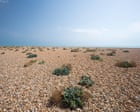
Country diary 1976: Dungeness is a desert with variety
April 6, 2026
Wildlife | The Guardian
9 April 1976: Willow scrub, reed, and juncus rush can be found, while flooded gravel pits are much frequented by wild fowlKENT: A stony desert pointing like a stubby finger at the continent. Such is Dungeness, one of the most extraordinary forelands in Britain. The skies are wide enough to make even lighthouses and power stations seem insignificant.
It is a desert with variety. In the troughs of the shingle ridges is enough moisture to support willow scrub, reed, and juncus rush. Gravel extraction on a big scale has created flooded pits much frequented by wild fowl. This is the first landfall for the spring migrants returning and the gorse is abundant in its welcome. A flock of black-headed gulls is following a plough. They dominate the area, nesting early and so successfully that they make life difficult for the terns that will be arriving later in the month to find nesting sites scarce. The gulls rob the terns’ eggs too. Other plunderers await, magpies, black-backed gulls, rooks, and carrion crows all capable of taking an egg or a chick.Management of such a reserve covering 1,000 acres poses complex problems, a balance between the birds as well as between man and birds. More than 40 species nest here in the coming months. Already the bushes are alive with yellow-hammers, meadow pipits, wag-tails, and chaffinches. A dozen goldfinches are turning over the hay laid out for the yearling lambs returned from winter pastures. Overhead is a nice conjunction of the season, the first wheatear and the solitary brent goose way off its wintery path. Continue reading...
Wildlife | The Guardian
Coverage and analysis from United Kingdom. All insights are generated by our AI narrative analysis engine.