
Britain should follow South Korea and treat nuclear energy as a 'continuous national mission', new report says
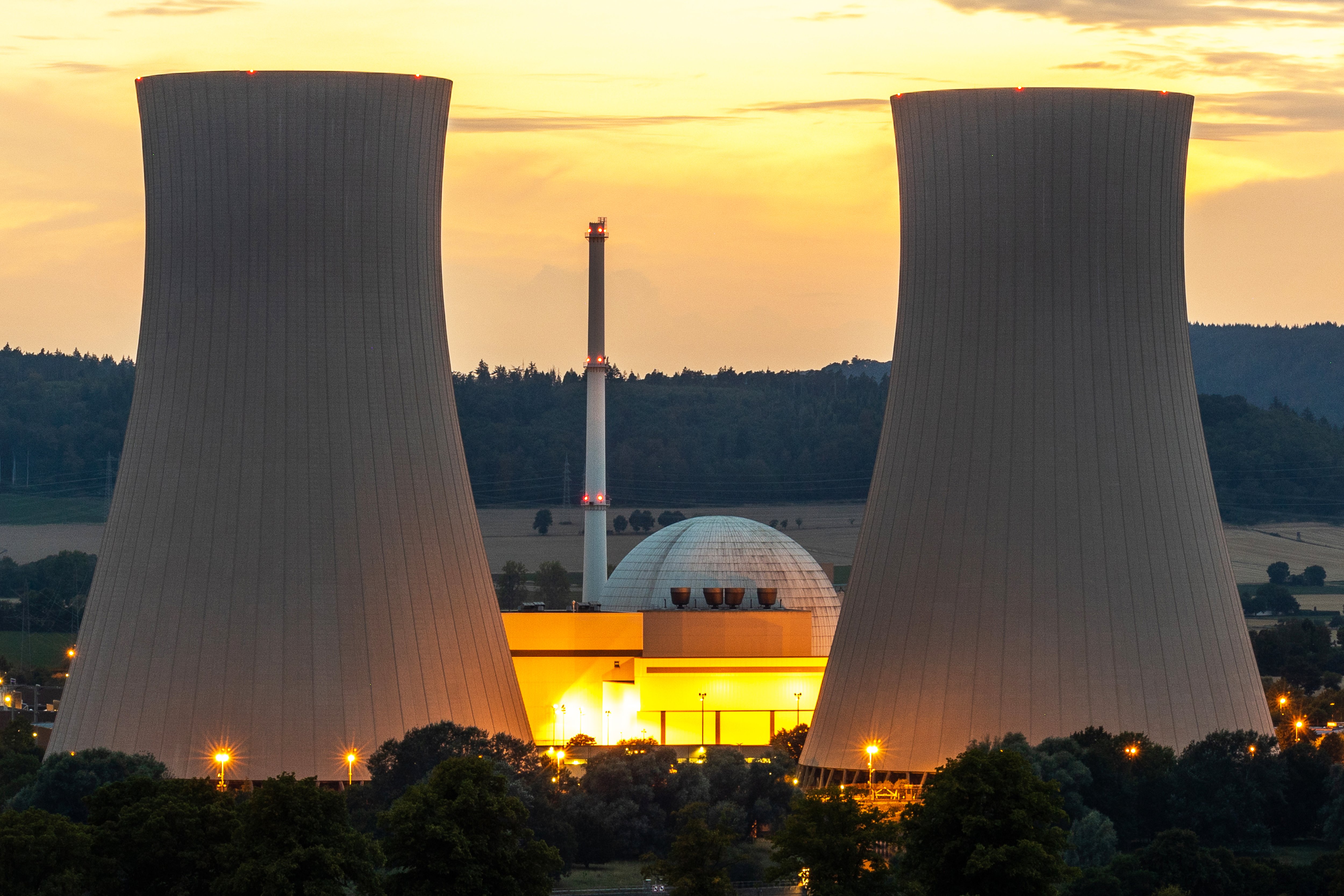
Britain must treat nuclear energy as a “continuous national mission” instead of approaching each power plant as a bespoke project, an atomic scientist has said. It should follow the lead of South Korea if it wants to build nuclear power stations faster and more cheaply, a paper for the Policy Exchange think tank has argued. While the UK has world class technical know-how, it has struggled to deliver nuclear power at scale, Dr Won-Pil Baek, Senior Research Fellow at the Korea Atomic Energy Research Institute, has said. South Korea, meanwhile, has gone from strength to strength, transforming from an energy-dependent state in the 1950s to a nuclear powerhouse. TRENDING Stories Videos Your Say The secret, said Dr Baek, is treating nuclear power as an ongoing project rather than taking each piece of infrastructure in isolation.He said: “While the UK has historically approached nuclear builds as a series of bespoke, isolated infrastructure projects, Korea treated nuclear energy as a continuous national mission.“For the UK, as it embarks on an ambitious journey to revitalise its own nuclear landscape, the Korean experience yields several profound conclusions that transcend simple technology transfer.”Nuclear power is key for Britain’s climate ambitions. Energy Secretary Ed Miliband has spoken of a “golden age” for nuclear and said it is “vital for achieving our energy independence and reaching net‑zero targets”.But South Korea operates 26 nuclear reactors providing 30 per cent of its electricity, while the UK which operates just nine reactors, providing 15 per cent of supply.The UK’s Sizewell C, due to open in the 2030s, will cost £38.2billion to build.Two South Korean reactors, which will generate a similar amount of power, are being constructed for a total of £6.85billion.The South Korean plants are also quicker to build, Dr Baek says, with these advantages stemming from strong state coordination and standardised reactor designs.LATEST DEVELOPMENTSBritain investing £2.5 BILLION in 'holy grail' of energy in bid to make UK 'completely independent' from price shocksNuclear power station approved with 8,000 jobs to follow as Rolls-Royce pumps £2.5billion into WalesWorld facing NEW nuclear arms race that could see 20 countries 'chasing the bomb'“By repeatedly building the same designs, Seoul recaptures the costs, skills, and supply chain benefits over the long term, ensuring a healthy nuclear ecosystem,” the From Project to Programme report finds.Dr Baek says that while UK expertise is world class, our ‘stop/start’ approach to nuclear has held us back.He said: “The UK’s principal nuclear challenge is not technological capability, but delivery capability.“Despite possessing world-class scientific expertise, advanced regulatory institutions, and full fuel-cycle competence, the UK has struggled to deliver large-scale nuclear infrastructure predictably, rapidly, and cost-effectively.“Decades of stop-start construction have weakened domestic supply chains, fragmented project delivery structures, and eroded accumulated engineering experience.”Korea, in contrast, has developed a long-term national programme for nuclear, he points out.“Through continuous fleet deployment of standardised reactor designs, Korea institutionalised learning-by-doing effects across engineering, construction, manufacturing, regulation, and workforce development,” he said.“This programme-based approach enabled Korea to reduce construction costs, preserve industrial capability, and ultimately emerge as a competitive exporter of nuclear technology.“Overall, the Korean experience demonstrates that successful nuclear development depends not only on reactor technology itself, but on the institutional, industrial, and political systems required to deliver nuclear programmes continuously over multiple decades.”Dr Baek called for more UK-Korea co-operation, saying both nations would benefit. Britain excels in financial and regulatory areas, as well as technical aspects such as the fuel-cycle – the path uranium takes from the ground, to the power plant and on to disposal.Korea provide “manufacturing depth and proven construction discipline”, Dr Baek said.The report stated: “Together, Britain and Korea can build faster and cheaper nuclear programmes, including Small Modular Reactors and joint projects for third-country markets.”His report recommended Britain committing to a rolling pipeline of standardised reactors that could be used for repeatable projects.Cooperation between the UK and Korea could see British staff placed in Korean projects and vice versa.Dr Baek wrote: “The implication is clear: unless the UK rebuilds its delivery capability through a programme-based approach, its nuclear ambitions - however well-articulated -will remain difficult to realise in practice.”A spokesman for the Department for Energy Security and Net Zero said: “We are reversing a legacy of no new nuclear power being delivered to unlock a golden age of nuclear, securing thousands of good, skilled jobs and billions in investment.“Sizewell C will deliver clean electricity for the equivalent of six million of today’s households for at least six decades and the UK's first small modular reactors at Wylfa will power the equivalent of three million homes, bringing energy security.” Our Standards: The GB News Editorial Charter
Narrative Intelligence Brief
This article was published by GB News, a source frequently categorized with a lean right bias based in United States of America. Our narrative intelligence engine continuously monitors coverage from this outlet to track framing, bias, and rhetorical patterns. Our initial algorithmic scan of this specific piece did not flag high-confidence rhetorical techniques, suggesting a generally straightforward reporting style or neutral framing. By understanding the editorial perspective of GB News, readers can better contextualize the information presented and compare it across our broader media matrix to find the real narrative.
Explore related topics: Stay informed with Real Narrative News as we track unfolding stories. Dive deeper into our coverage of pivotal topics including crystal palace, conference league, matthew perrys, rayo vallecano, perrys assistant, earnings transcript, donald trump, palace rayo, hormuz, and matthew perry. Our intelligence streams continuously monitor these keywords to bring you unbiased analysis and real-time updates on topics like "Britain should follow South Korea and treat nuclear energy as a 'continuous national mission', new report says".
More from GB News
May 27, 2026
Oura Ring 4 rival revealed with one-of-a-kind feature, advanced health tracking, and 150 days of battery life
May 27, 2026
Peter Mandelson's ties to China, Russia and Israel among concerns raised by Britain's vetting agency
May 27, 2026
Britons to be able to stream videos and join video calls on train wifi in major tech overhaul
May 27, 2026
Novak Djokovic booed during second-round win at French Open
May 27, 2026
Britain is likely headed to a 'more divided society', warns Mark Littlewood
Analysis Methodology
This narrative analysis was generated using the CoDataLab Global Intelligence Engine. Our proprietary AI scans thousands of cross-border sources to identify sentiment patterns, framing techniques, and potential media bias. While AI provides the data-driven foundation, our objective is to empower readers with additional context beyond the standard headline.The content displayed above is a structured summary designed for rapid information processing. For the full original report, please visit the source outlet.More Coverage
Discussion