
0
7 archaeological finds that confirm the accuracy of the Bible
May 3, 2026
Posted 1 hour ago by
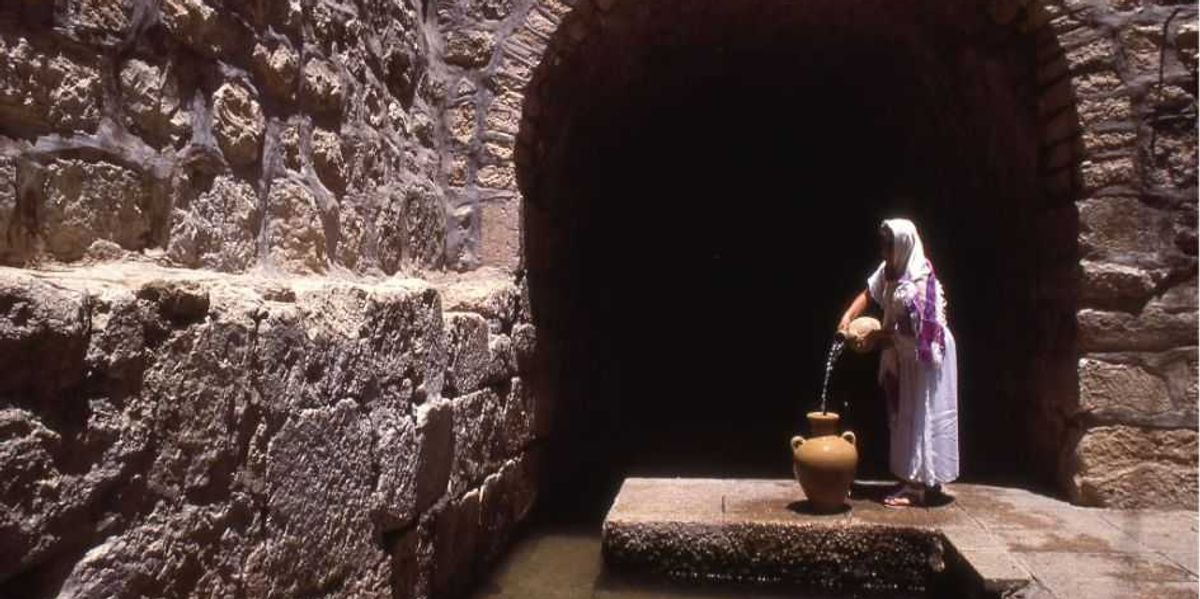
Spend enough time around atheists, and you’ll hear a familiar refrain: the Bible as a bundle of fairy tales about a “sky god,” stitched together long after the fact and taken seriously only out of habit.That tone has filtered down into the culture more broadly, where it is not always argued so much as assumed. The biblical world is treated as distant and half-imagined — useful for moral lessons, perhaps, but not something you would expect to intersect with recoverable history.In 2004, work in Jerusalem uncovered a stepped pool that matched the description of the Pool of Siloam — where Jesus sends a blind man to wash.Archaeology doesn’t answer the larger questions of faith.
It doesn’t attempt to. But it does something more modest and, in its own way, more disruptive: It keeps turning up evidence that biblical events actually happened.RELATED: 5 reasons this 'Noah’s ark' discovery is harder to dismiss than skeptics admit Heritage Images/Getty Images1. The Tel Dan SteleIt was once common to hear that King David belonged more to tradition than to history — a useful founding figure whose existence could not be confirmed.That position became harder to hold after fragments of a ninth-century B.C. inscription were found at Tel Dan. Written by a neighboring kingdom, it refers to the “House of David,” using the standard language of dynasties.It doesn’t tell us everything about David. It does show that, within a couple of generations, surrounding nations recognized a ruling line traced back to him. That’s not how ancient peoples spoke about fictional ancestors.2. The Pontius Pilate InscriptionThe Gospels place Jesus within a very specific Roman context, under a prefect named Pontius Pilate. Historians had references to Pilate in written sources, but for years nothing material.A stone inscription found in Caesarea in 1961 supplied that missing piece, naming Pilate and identifying his office.It is the sort of detail that rarely makes headlines. But it reinforces something the Gospels assume throughout: They are describing events within a functioning Roman administration, not an abstract or symbolic setting.3. The Dead Sea ScrollsBefore the mid-20th century, the gap between the oldest surviving Hebrew manuscripts and the time of their composition left room for speculation. Some assumed the text had shifted substantially over the centuries.The 1947 discovery of the Dead Sea Scrolls changed the terms of that discussion. Dating back more than a thousand years earlier than previously known manuscripts, they preserve large portions of the Old Testament.What stands out is not perfect uniformity, but consistency. Variants exist, as they do in any manuscript tradition. Yet the overall stability of the text across such a long span is difficult to ignore.For anyone concerned about how Scripture was transmitted, this matters more than any abstract argument.4. The Pool of SiloamThe Gospel of John has often been treated as more theological in tone, with less confidence placed in its geographical detail.Then, in 2004, work in Jerusalem uncovered a stepped pool that matched the description of the Pool of Siloam — where Jesus sends a blind man to wash.What began as a partial discovery has gradually expanded. Last year, ongoing excavations revealed more of the pool’s full extent — confirming that it was not a small ritual basin, but a prominent landmark used by pilgrims making their way up to the Temple.The discovery wasn’t driven by an attempt to confirm the Gospel. It emerged from routine excavation and has been clarified piece by piece since. Its alignment with John’s account has led even cautious scholars to acknowledge the text’s familiarity with pre-A.D. 70 Jerusalem.5. Hezekiah’s TunnelBiblical accounts of kings often face skepticism, especially when they describe large-scale projects under pressure.In 2 Kings and 2 Chronicles, King Hezekiah prepares Jerusalem for an Assyrian invasion by securing the city’s water supply — redirecting the Gihon Spring so that it can’t be used by enemy forces outside the walls. It’s described briefly in Scripture, almost in passing, but the implication is significant: a major engineering effort carried out under the pressure of an approaching army.In Jerusalem, the tunnel itself has long been known and even traversed — an ancient water channel cutting through bedrock. What wasn’t clear for centuries was whether this was the tunnel described in Scripture or simply one of several.Significant doubt was removed in 1880, when two boys exploring the passage discovered an inscription a few meters from the southern exit. Carved into the wall, it describes workers digging from opposite ends and hearing each other’s voices as they broke through. Jerusalem was part of Ottoman-ruled Palestine at the time, and the inscription was taken to Turkey, where it remains today.The tone is practical, even understated. It reads like the kind of record people leave when they have completed something difficult — not the kind they invent later.6. The Cyrus CylinderThe Book of Ezra depicts Persia's Cyrus the Great permitting the exiled Jews of Judah — the southern kingdom centered on Jerusalem — to return and rebuild their temple.Some skeptics have regarded this account as suspiciously convenient — exaggerated to fit a theological narrative presenting Cyrus as a kind of divinely appointed liberator for Judah.A clay cylinder discovered in Babylon in 1879 complicates this view. It describes Cyrus restoring displaced peoples and supporting their religious practices across the empire — not as a one-off gesture, but as a governing approach.It doesn’t mention Judah directly, but it does place the return from exile within a broader, historically plausible imperial pattern.7. The Ketef Hinnom ScrollsDebates over when parts of the Old Testament were composed often turn on how early we can place recognizable text.Two small silver scrolls found in a burial site near Jerusalem in 1979 contain a version of the priestly blessing from Numbers: “The Lord bless you and keep you ”They date to the seventh century B.C., before the Babylonian exile.Delicate and tightly rolled, they show that passages still read in churches today were already in use centuries earlier than some theories allowed.None of this proves the claims that matter most to Christians. It doesn’t attempt to weigh miracles or settle theology.It does, however, narrow the distance between the biblical text and the world it describes. Enough, at least, to make the old habit of dismissing it as a collection of late-arriving myths seem a little less secure than it once did.
Conservative Review
Coverage and analysis from United States of America. All insights are generated by our AI narrative analysis engine.