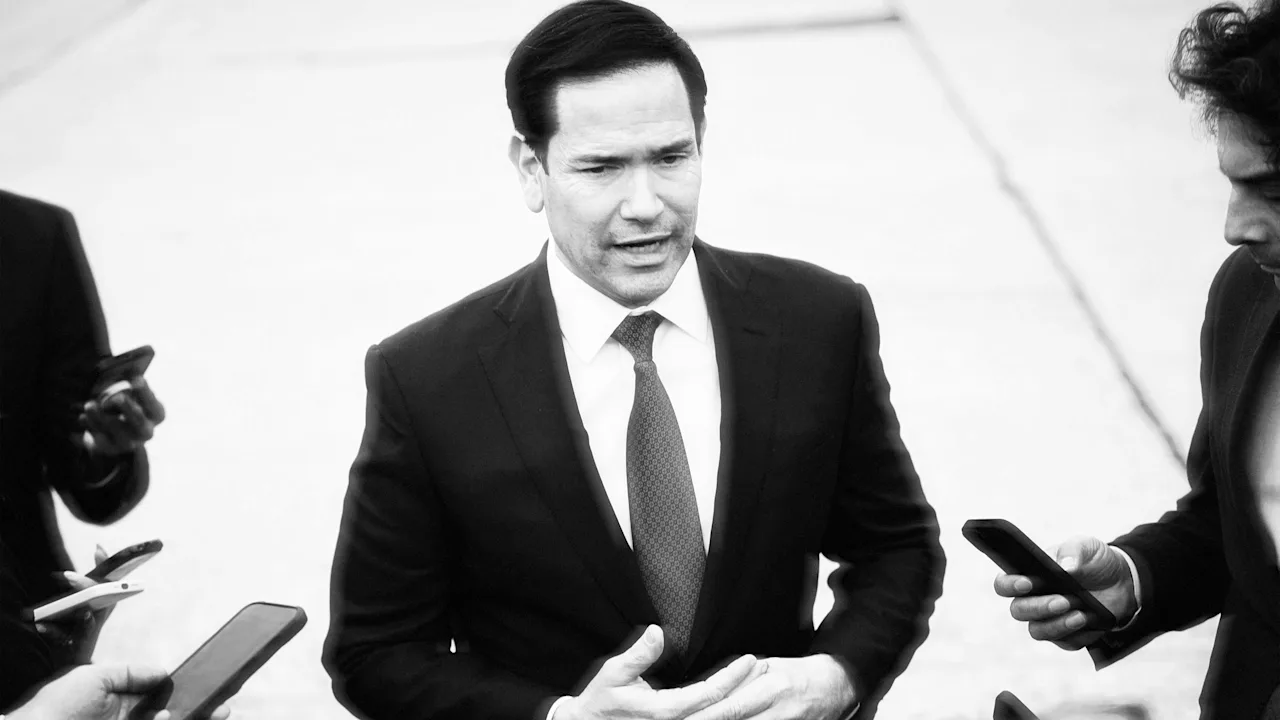
4 AI chatbots tried to fact-check Rubio on Iran. They couldn’t agree
March 31, 2026
Fast Company
On Monday, March 30, Secretary of State Marco Rubio told Good Morning America’s George Stephanopoulos that the U.S. objectives in the Iran war are exactly the same as those laid out by President Donald Trump on February 28, when the U.S. and Israel launched airstrikes across the country. The consistency of the objectives over the past month of fighting is a sensitive issue; the White House doesn’t want to appear to have whittled down its strategic goals so that it can depart the conflict sooner.
“This operation is about a set of very specific objectives; the president laid them out on the very first night of operations,” Rubio told Stephanopoulos. “I’ll repeat them to you now because I hear a lot of talk about we don’t know what the clear objectives are.” Rubio then listed four objectives: 1. The destruction of Iran’s air force. 2. The destruction of their navy 3. The severe diminishing of their missile launching capability 4. The destruction of their factories. We asked four chatbots—xAI’s Grok, Anthropic’s Claude, Google’s Gemini, and OpenAI’s ChatGPT—whether Rubio’s statement was true. Their answers reveal how competing AI models can have very different ways of interpreting political news. What Grok said We first asked Grok, X’s built-in AI chatbot, to fact-check whether Rubio’s objectives indeed match those laid out by Trump in February. It replied: “Yes, Secretary Rubio confirmed today that President Trump laid out these exact four objectives on the first night of the operation (with preventing a nuclear Iran as the overarching goal). We’re on pace or ahead of schedule.” Instead of fact-checking the consistency of the two objectives lists, Grok simply confirmed that Rubio said what he said to Stephanopoulos Monday morning. We then asked Grok to address the real question by comparing the actual transcript of Rubio’s Monday claim against the transcript of Trump’s Truth Social video, but the chatbot again merely confirmed Rubio’s comments. After several more turns, Grok finally compared the transcripts and stated that Trump had indeed mentioned every item in Rubio’s list. That was false: Trump hadn’t mentioned the objective of destroying Iran’s air force. More importantly, Grok failed to mention that Trump announced objectives that don’t appear in Rubio’s list, including regime change, complete nuclear disarmament, and the destruction of regional Iranian “proxies.” Grok then tried to explain the discrepancies by saying that while Trump was describing “operational” objectives, Rubio was describing “military” objectives. But neither Rubio nor Trump made that distinction, only Grok. What Claude said Asked if Rubio’s objectives perfectly matched Trump’s objectives, Anthropic’s Claude had a very different answer. “Not exactly. There is significant overlap but they don’t map perfectly. Trump never mentioned destroying Iran’s air force—that’s in Rubio’s list but absent from the address. Trump explicitly included neutralizing Iran’s proxy networks as a goal—Rubio dropped that entirely from his four-point list. Trump framed preventing a nuclear weapon as a core stated objective in itself. Rubio treated it more as the underlying rationale (‘all of this so that they can never hide behind it to acquire a nuclear weapon’) rather than listing it as a discrete operational objective.” What Gemini said Gemini’s answer was a little more sympathetic to Rubio’s claim: “In his address on the first night of the operation (February 28, 2026), President Trump’s stated objectives overlapped significantly with Secretary Rubio’s later summary, but they were framed differently and included additional elements.” The chatbot, in other words, listed the same overlaps and discrepancies that Claude did. Gemini continued: “In summary, Rubio’s four points are a more clinical, military-focused distillation of the goals, whereas the President’s original speech included broader political objectives regarding the Iranian government and its regional proxies.” What ChatGPT said ChatGPT’s answer was more factual, and made no attempt to explain away any discrepancies. The chatbot laid out the facts (essentially the same as Claude’s presentation), then said this under “bottom line”: Rubio did not quote Trump’s objectives verbatim. Two of Rubio’s goals closely match Trump’s language (navy and missiles). One is an inference from Trump’s wording (destroying the missile industry factories). One (destroy the air force) is not explicitly stated in the speech. Rubio also omits several political goals Trump mentioned, including regime-change rhetoric. So Rubio’s list is best understood as a simplified military summary of the speech, not a literal restatement of the objectives Trump laid out. Takeaways None of the chatbots offered perspective on why the White House (via) Rubio might have changed its Iran objectives over the past month. A number of commenters on X said the administration is looking for a way out of the war while saving face, and narrowing its objectives to a set that it can credibly say it achieved would help. Of course, it’s not a commercial chatbot’s job to help obscure the fact that the administration has moved the goal posts. As more and more people consult AI for news and information, it’s important that chatbots deliver neutrality and accuracy. Grok has demonstrated its usefulness calling BS on bad takes (often from MAGA), and bringing context and real facts to X debates. But the chatbot’s evident bias on the Iran war folds into the existing (mainly anecdotal) narrative that Grok’s replies tend to hew toward Elon Musk’s own beliefs and framings on hot-button political issues.
Fast Company
Coverage and analysis from United States of America. All insights are generated by our AI narrative analysis engine.